
Ealing Beaver Project
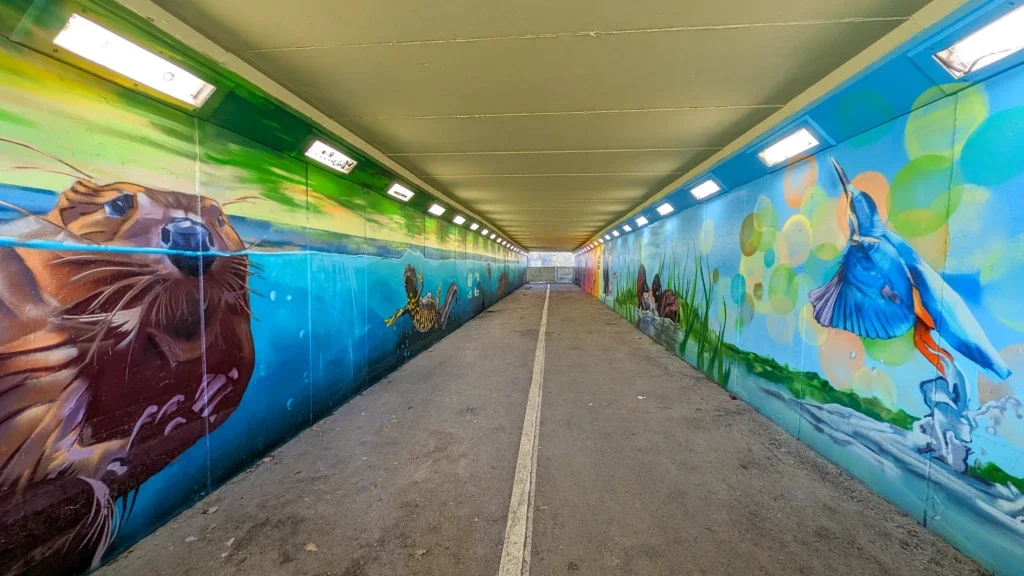
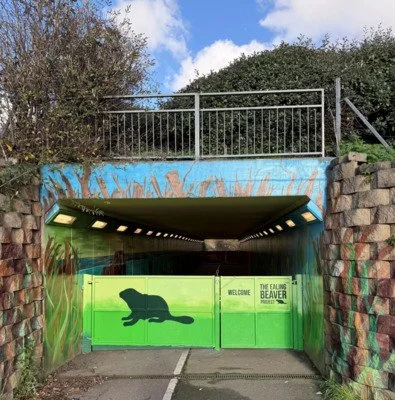
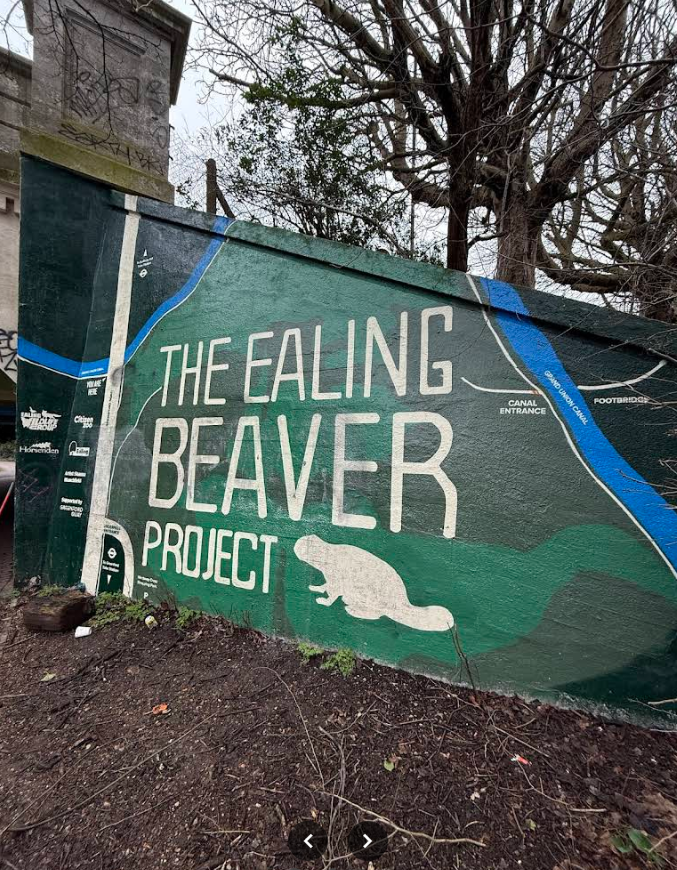
Entrance to the Ealing Beaver Project in Paradise Fields
Location: Ealing, West London, UK
Commissioner: Ealing Wildlife Group
Funder: Mayor of London and Greystar
Site type: Community ecology project / public access infrastructure
Role: Lead artist
Years: 2023–2025
Outcome: A phased series of placemaking murals that announced, explained, and normalised the return of beavers to London for the first time in over 400 years, transforming contested access points into educational gateways.
Key Takeaway:
Adaptive, educational placemaking helped secure public support for a major ecological intervention, demonstrating how art can explain change and reduce community resistance.
The Context
The Ealing Beaver Project introduced beavers to Paradise Fields in West London, the first beavers in London in over four centuries.
The project addressed a serious environmental issue: repeated flooding of the site, which would have required multi-million-pound engineered flood defences. Instead, Ealing Wildlife Group proposed a nature-based solution: allowing beavers to manage water flow naturally through dam-building.
To support this, new metal gates were installed at access points to safely contain the beavers within the site. While essential, these gates disrupted established walking routes and generated concern among local residents.
Public art was commissioned as a tool to:
explain what was happening
soften resistance to physical barriers
mark the significance of the project
and create a welcoming entrance to the site
The Challenge
Spatial constraints:
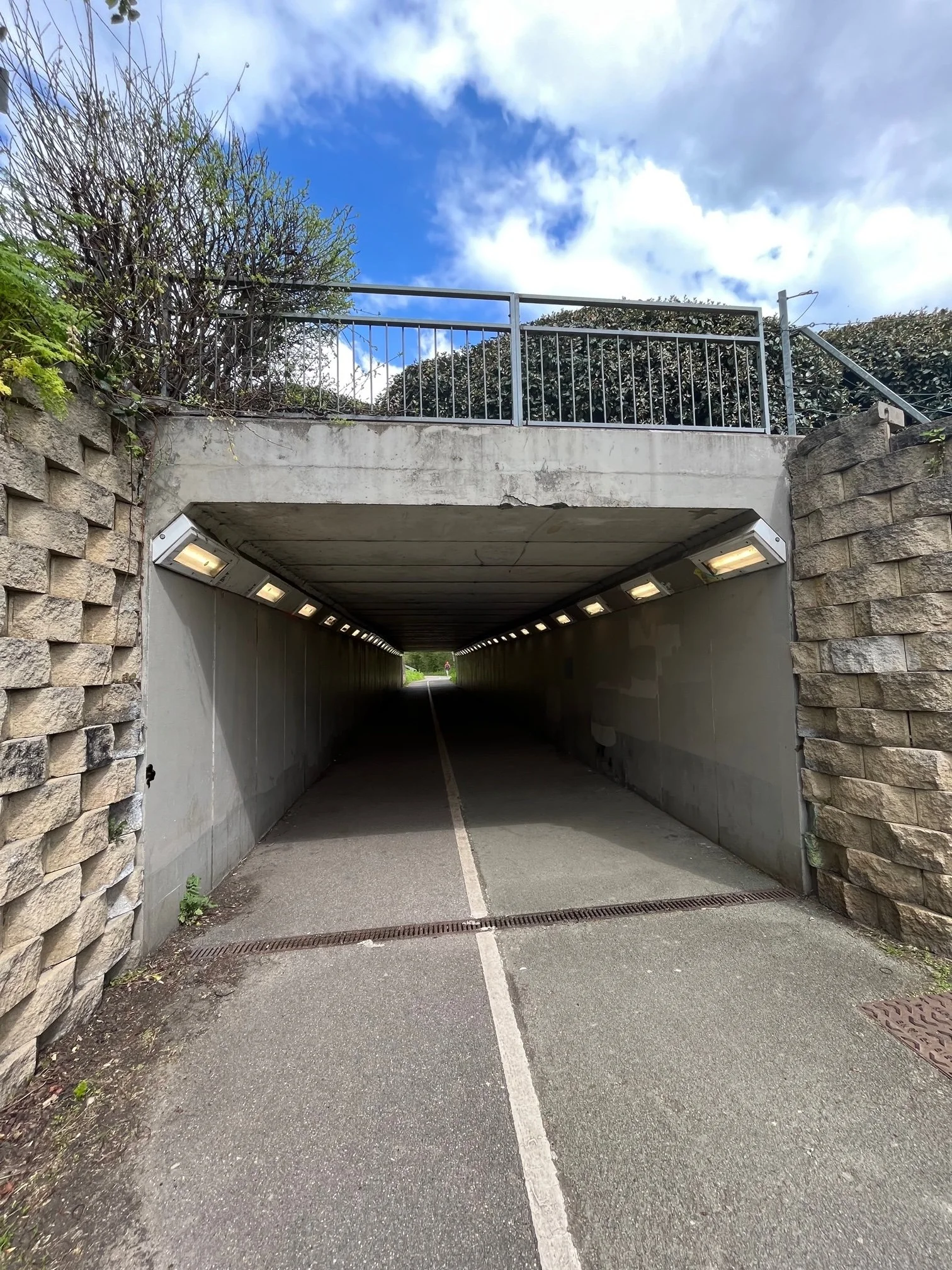
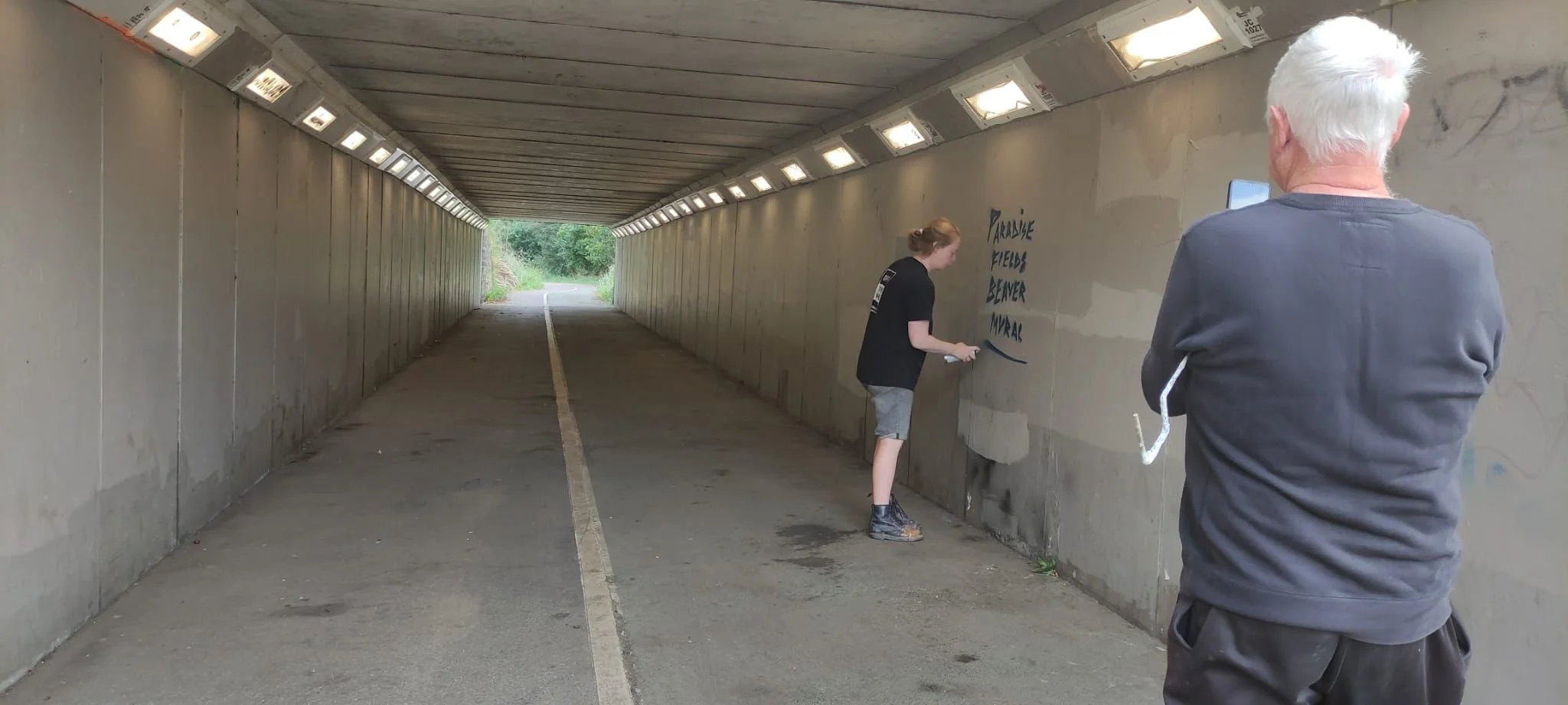
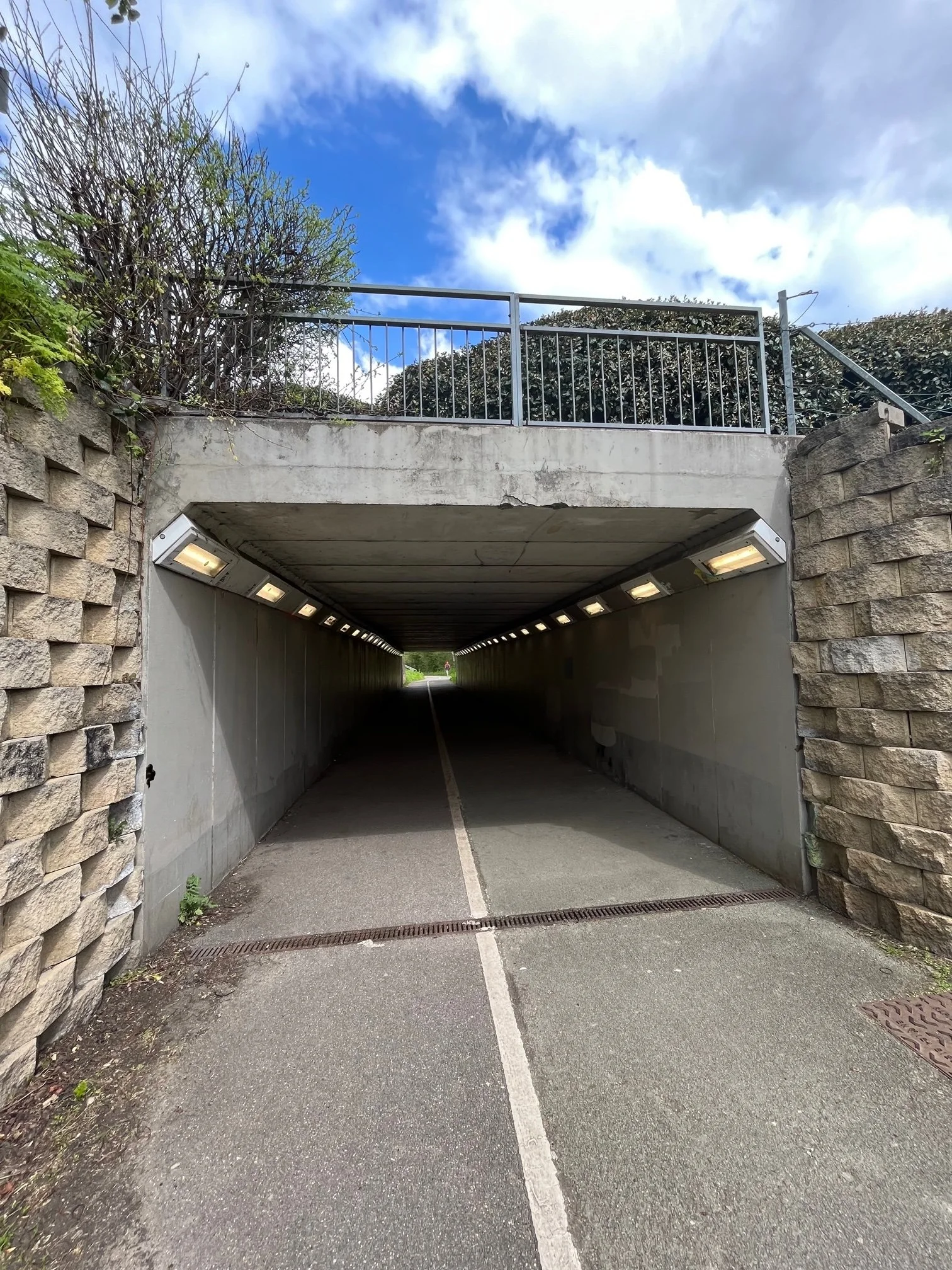
The primary site was a long pedestrian tunnel leading into Paradise Fields. The space was previously underused and had been occupied intermittently, giving it a dark and unwelcoming atmosphere.
The tunnel’s length and narrow proportions required a sequential approach rather than a single image. The artwork needed to guide people through the space while explaining the project without overwhelming it.
Social constraints:
The project involved multiple stakeholders: community groups, environmental organisations, local authorities, and the Mayor of London’s office. There was sensitivity around:
changes to access
the suitability of beavers in an urban environment
and the visibility of large new gates
Strategic constraints:
Budgets were tight and ring-fenced, with limited developer sponsorship. Timelines were fixed around official openings and site milestones. The artwork needed to be visually engaging, scientifically accurate, and durable in a high-traffic environment.
The Approach
The project was developed collaboratively with Ealing Wildlife Group and associated ecology partners.
The guiding principle was immersion: visitors should feel as though they were entering the beavers’ world, rather than being confronted by barriers.
Through consultation, the mural narrative was structured as a journey:
one side of the tunnel depicts an underwater environment
the other transitions from daylight to twilight, reflecting the beaver’s crepuscular behaviour (they go out at dawn and nightfall)
The tunnel entrances were designed to resemble beaver lodges, visually reframing the gates as part of a habitat rather than obstructions.
Species selection focused on:
keystone species
endangered animals
and wildlife expected to return if the beaver project succeeded
This allowed the artwork to function as both placemaking and informal education.
The Artwork (Phase One - 2023)
The initial mural spanned approximately 20 metres on each side of the tunnel, at a height of around 2.5 metres.
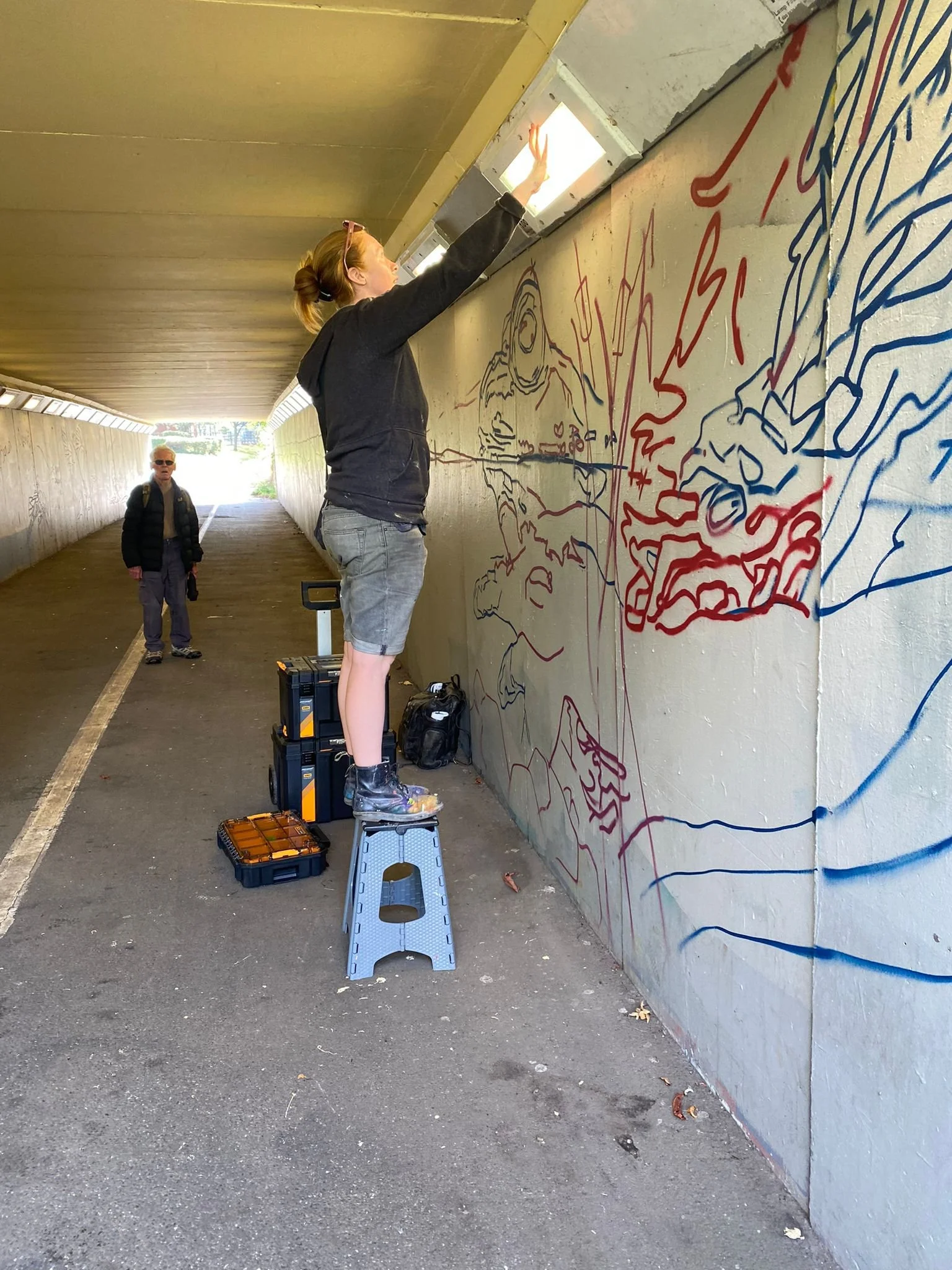
Medium: Spray paint over emulsion base
Surface: Concrete tunnel walls
Finish: Anti-graffiti coating (Urban Hygiene Easy-On)
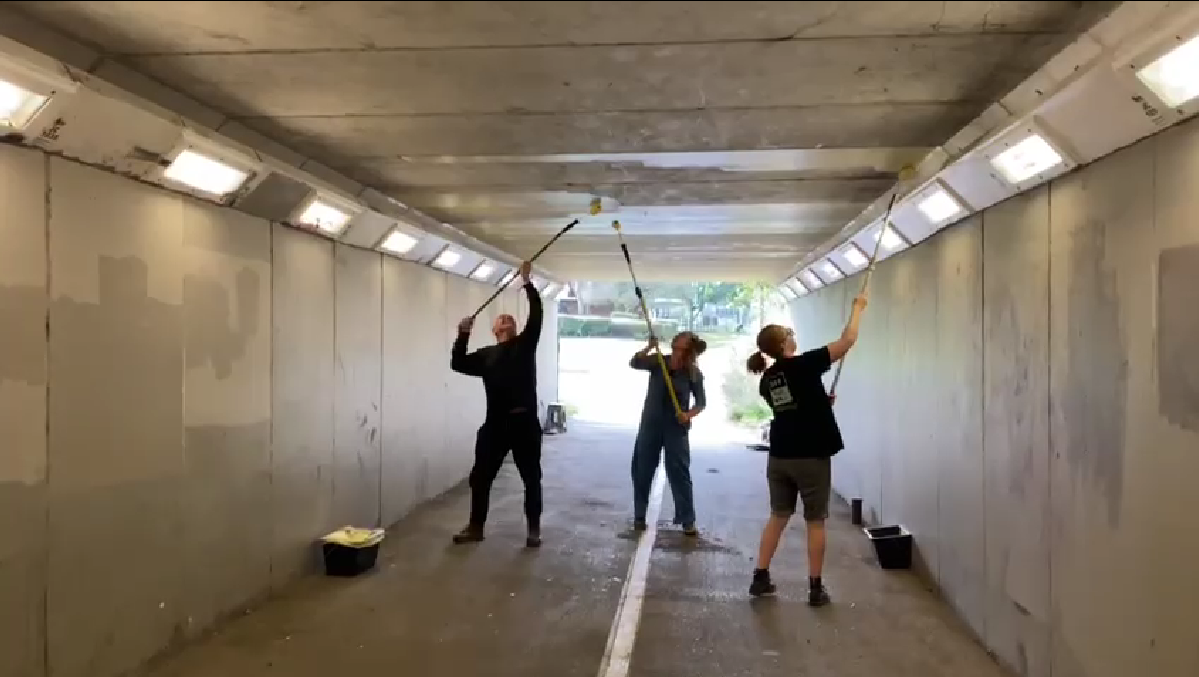
Delivery: Painted with volunteers from Ealing Wildlife Group
Community volunteers and corporate sponsors participated in preparation and painting the base coat and anti-graffiti layer, creating early buy-in and shared ownership.
Water Wall: Ealing Beaver Project Mural Stage 1
Flying Wall: Ealing Beaver Project Mural Stage 1
Adaptation & Expansion (Phases Two and Three)
The project evolved in response to how people actually used the space.
Phase Two (2024):
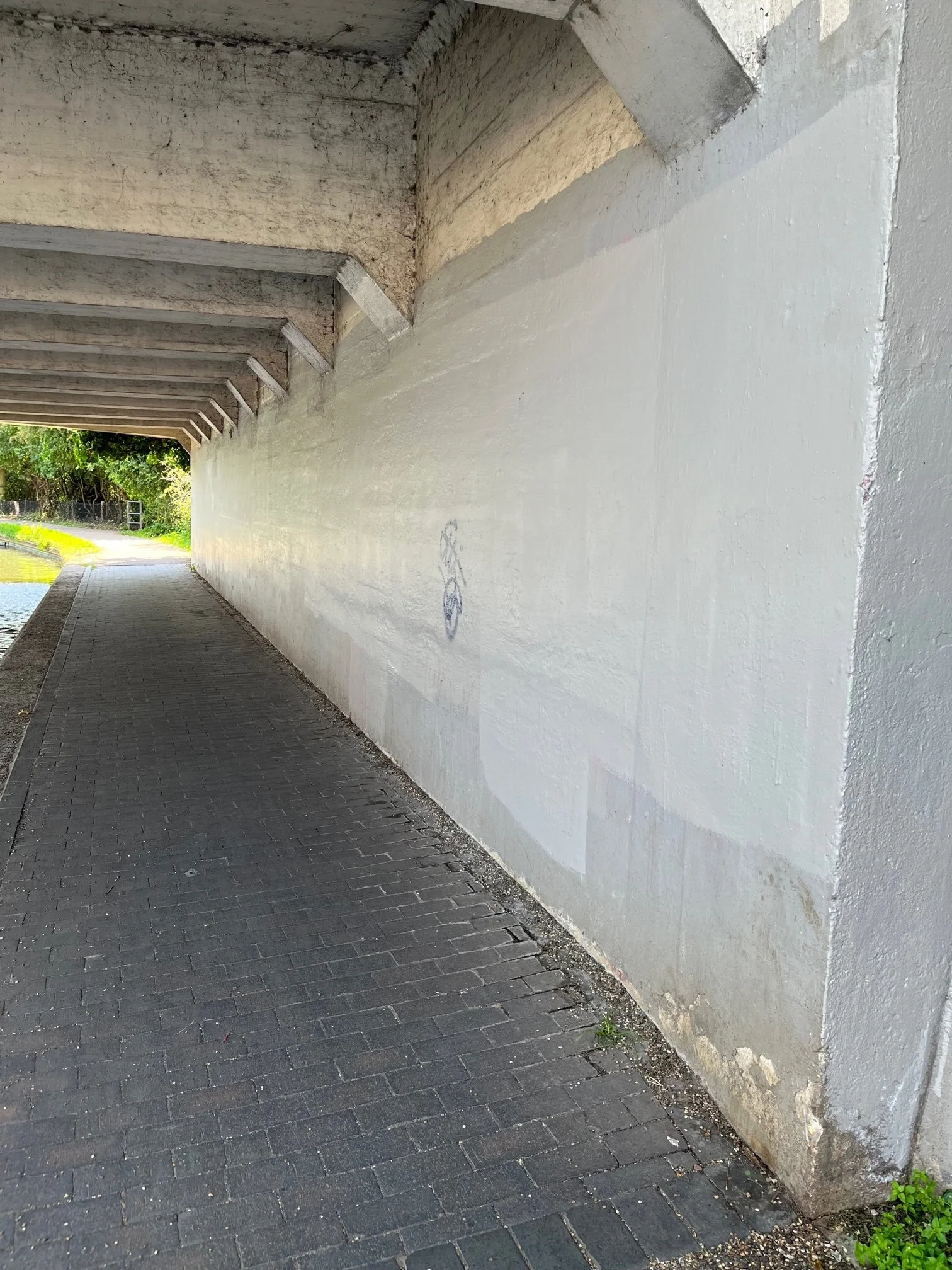
A second mural was commissioned at another entrance after positive public response. This version focused more explicitly on habitats and animal interactions. Stencilled species names were added after observing parents using the murals as educational tools with children.
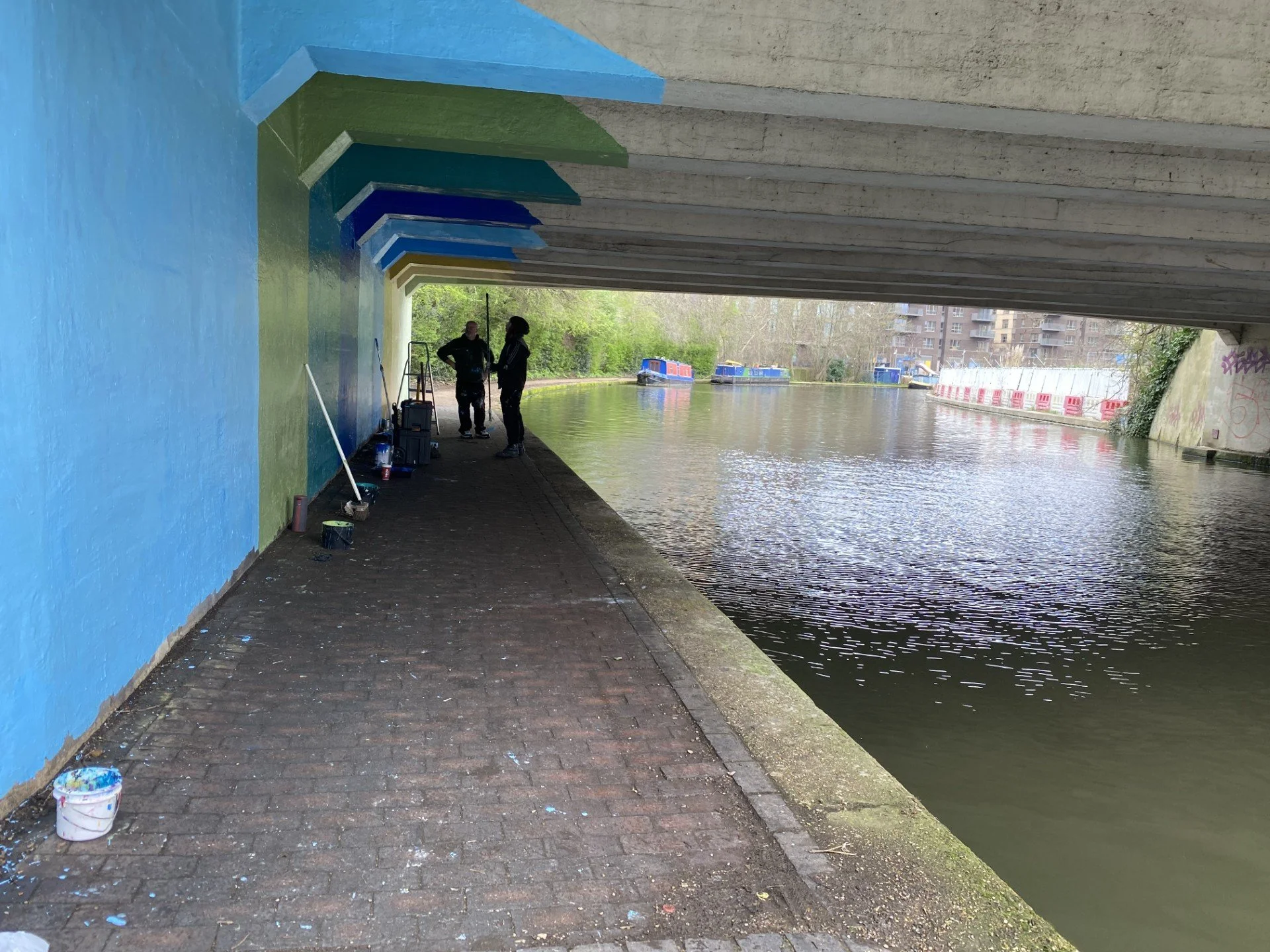
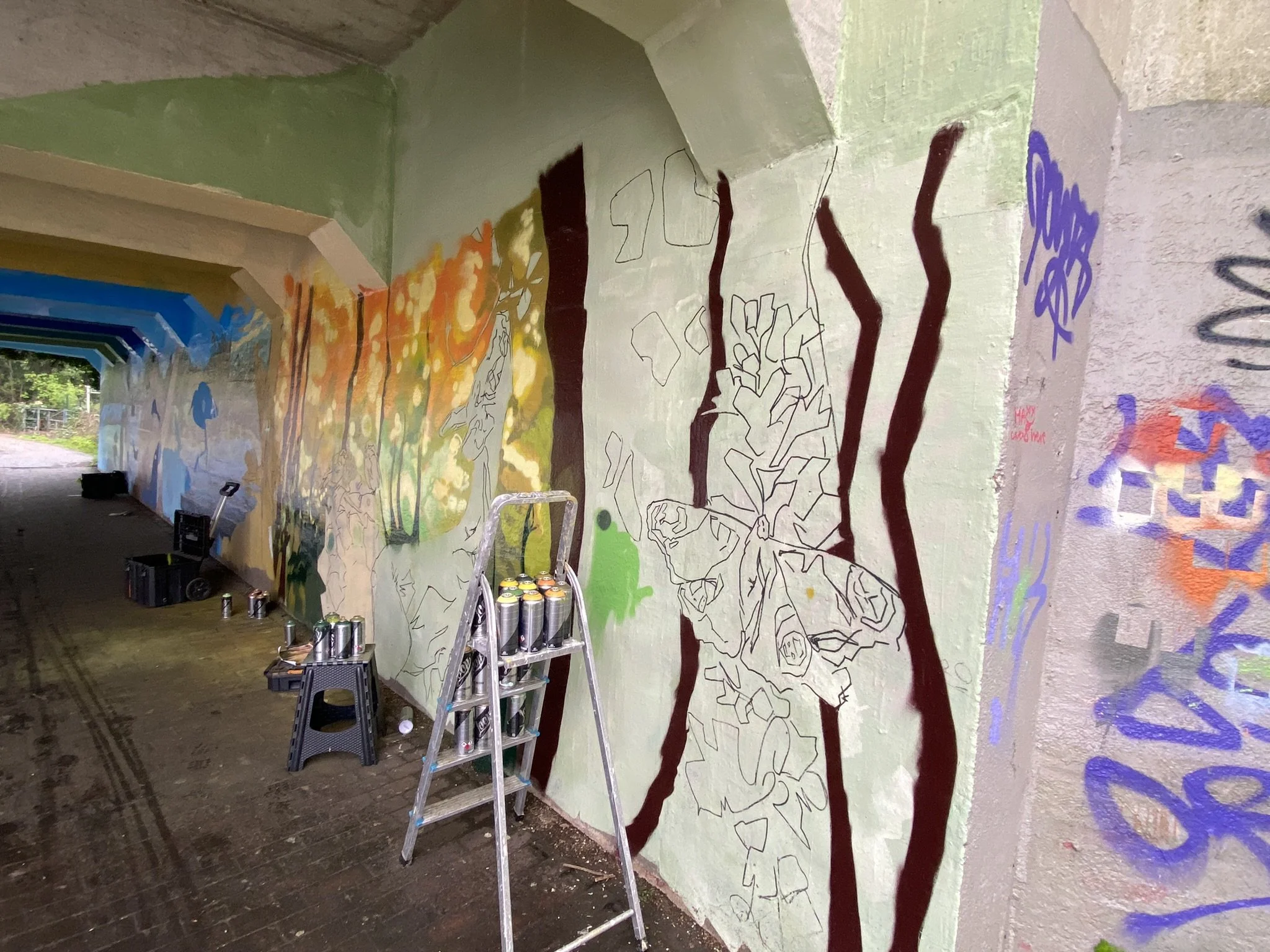
Habitat Wall: Ealing Beaver Project Stage 2
Phase Three:
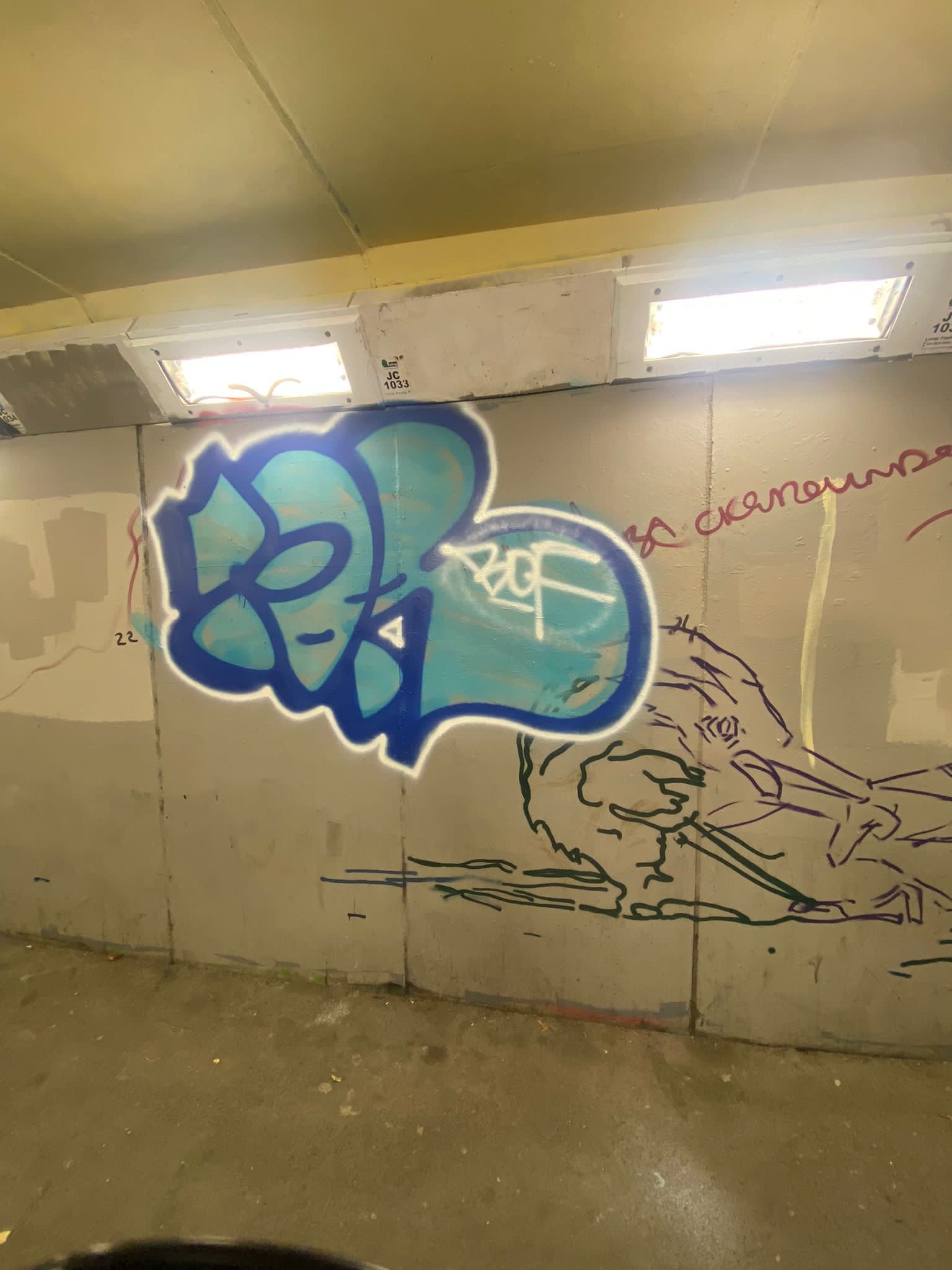
While the murals remained respected, the gates themselves continued to be tagged and misunderstood. A final phase introduced colour, wayfinding, and explanatory graphics directly onto the gates, clarifying their purpose and integrating them visually into the project.
Each phase responded directly to observed behaviour, improving usability and acceptance over time.
The Outcome
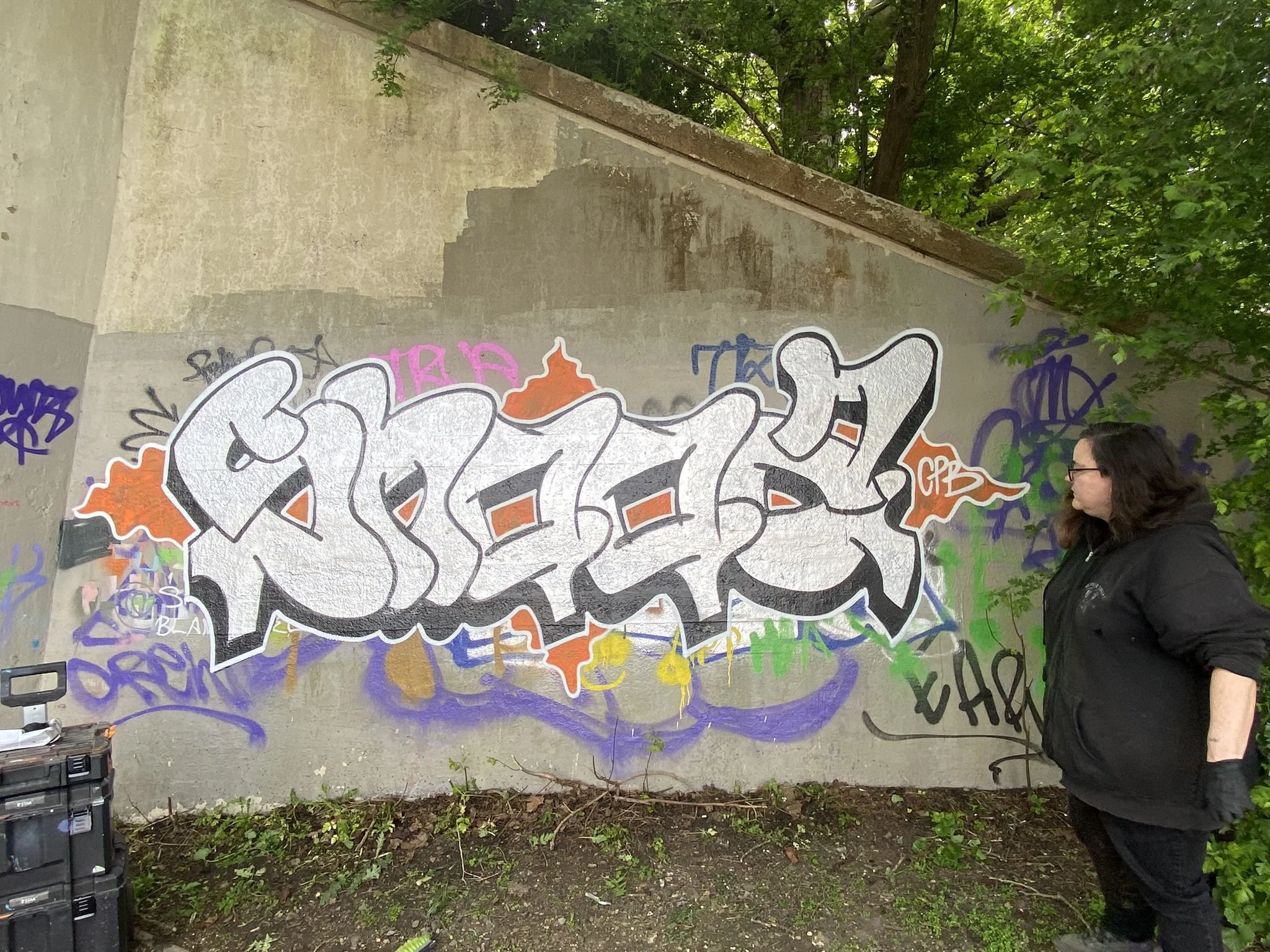
The murals transformed previously unwelcoming access points into points of curiosity and conversation.
Passers-by regularly stopped to ask questions about the beavers, flooding, and the artwork itself. These informal conversations became opportunities to explain both the ecological project and the role of public art.
Community response grew increasingly positive as understanding increased. The Mayor of London attended the site opening and publicly praised the project.
Crucially, the artwork helped shift perception:
from “barriers” to gateways
from confusion to excitement
from resistance to participation
Why It Worked
This project worked because it was adaptive, collaborative, and responsive.
Rather than treating the artwork as a finished object, it was allowed to grow alongside the site itself. Strong relationships with wildlife experts ensured accuracy and confidence in decision-making, while ongoing community engagement allowed the work to evolve in line with real-world use.
By prioritising explanation, immersion, and iteration, the murals supported not just the introduction of beavers, but the community’s ability to accept and care for a new way of living with nature.
“As part of the transformative journey of Paradise Fields, Greenford Quay proudly sponsored two stunning murals, one in the underpass entrance from the Westway Cross Retail Park and one in the canal towpath of Greenford Road Bridge. This transformed a once intimidating and unattractive space, into beautiful and educational pathways, serving as an entry gate to the Beavers’ habitat. These murals not only add vibrancy to the area but also contribute to the regeneration of the area.”
Interested in a Project Like This?