
Guinevere Claims Her Own Heart
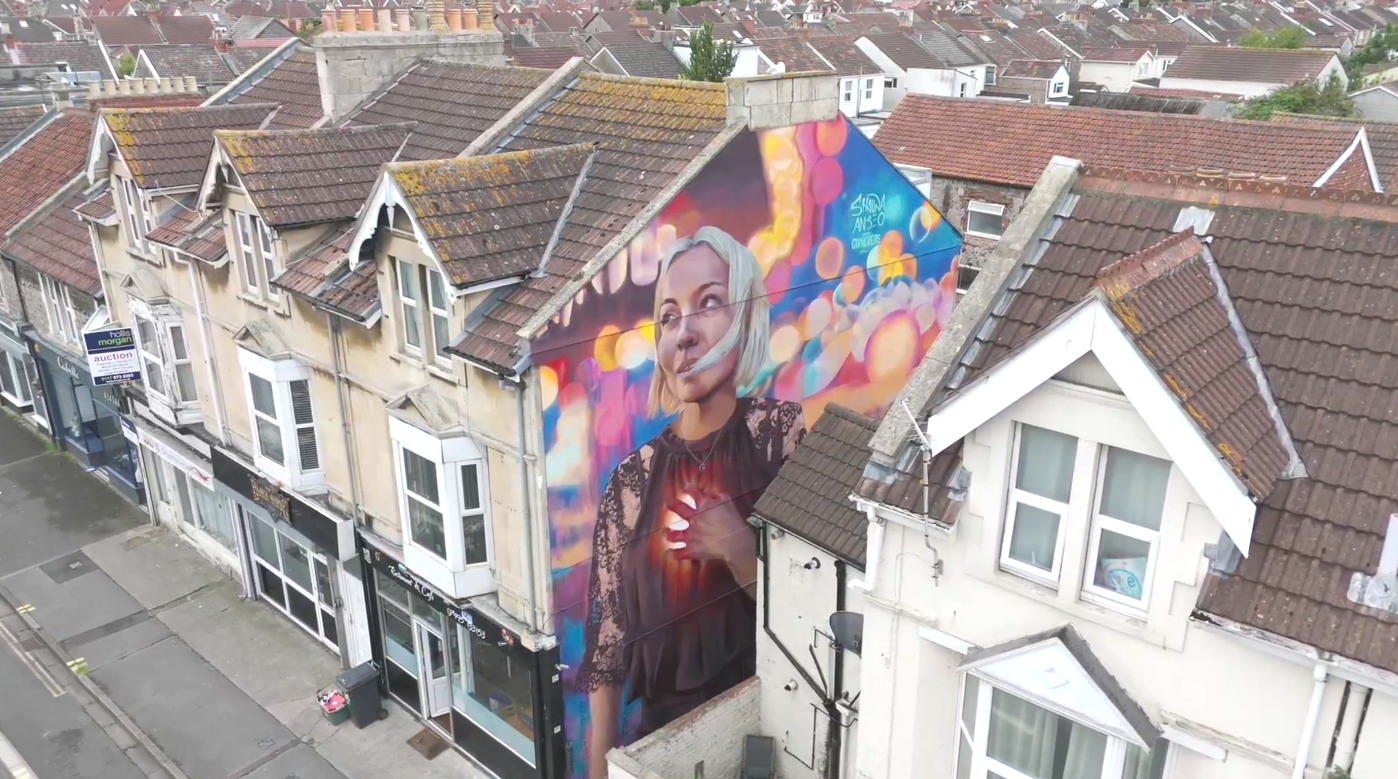
Guinevere Claims Her Own Heart, Weston Super Mare © Jake Davis Design
Location: Weston-super-Mare, UK
Commissioner: Weston Wallz
Site type: Festival commission / high street activation Role: Lead artist
Year: 2025
Outcome: A forgotten street became a destination, drawing new footfall to local businesses through a bold, high-visibility mural.
Key Takeaway: Targeted public art can increase footfall and reposition overlooked streets, supporting local businesses and cultural activation without large-scale infrastructure change.
The Context
Baker Street in Weston-super-Mare sits just outside the town’s main routes. Like many seaside towns, parts of Weston have struggled with decline, leaving certain streets underused, poorly lit, and overlooked by both residents and visitors.
Weston Wallz, a street art festival supported by the local council, has been running for several years as a tool to reinvigorate the town through art tourism. Murals are used strategically to encourage movement, exploration, and economic activity beyond the seafront.
The business that owned the wall on Baker Street commissioned an artwork specifically to change how people perceived the street, and to give them a reason to visit.
The Challenge
Physical constraints:
The wall itself was unusually shaped, with a significant portion partially obscured by adjacent buildings. Access was only possible via scaffolding, making movement across the surface more complex and limiting certain compositional options.
Time constraints:
As a festival commission, the mural needed to be completed within a fixed timeframe to coincide with the festival weekend, with no flexibility.
Strategic constraints:
Unlike other projects, this commission was not about representing an existing local history or community narrative. The goal was direct and practical: create something visually compelling enough to draw people down a street they would otherwise avoid.
The brief called for a brighter, more joyful visual language than the artist would typically use, prioritising impact and attraction over subtlety.
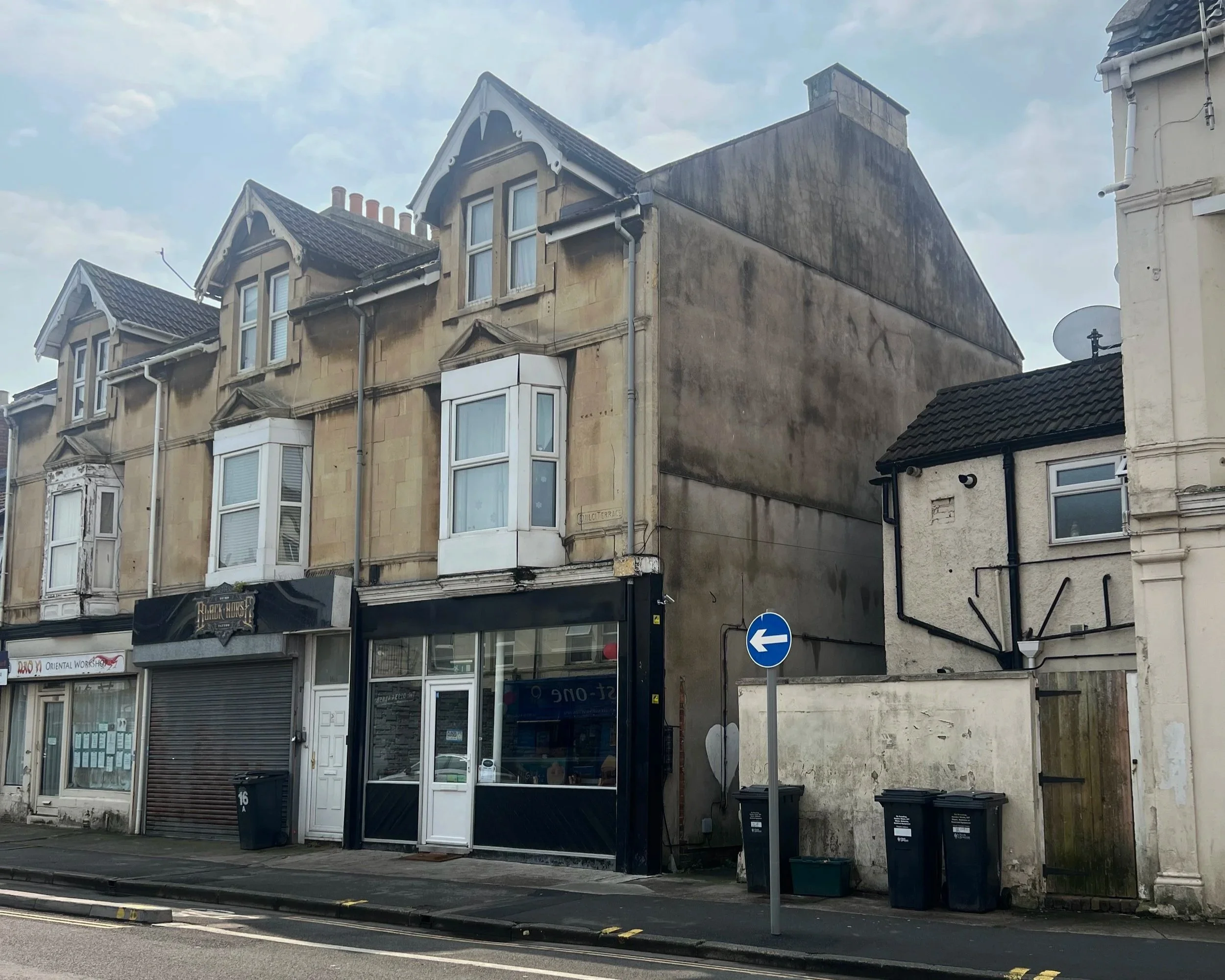
The wall prior to painting on a dilapidated street
The Approach
The project draws on regional mythology, inspired by the Arthurian legends associated with nearby Glastonbury and its long-standing identification with Avalon.
The figure of Guinevere is used as a symbolic archetype, a woman traditionally defined by others’ narratives, here reimagined as choosing her own future. In this retelling, Guinevere leaves Camelot behind and arrives in nearby Weston-super-Mare, mirroring the town’s own process of reinvention through art and culture.
This approach allowed the mural to carry meaning rooted in local myth while aligning with the festival’s aim: to create bold, memorable works that attract attention, movement, and footfall.
Throughout the project, the focus remained on the wall-holder’s needs, using colour, scale, and visibility to draw people into the street, even when that required stepping outside the artist’s usual stylistic comfort zone.
The Artwork
The mural depicts a female figure standing against a backdrop of multicoloured, glowing bokeh lights, referencing the attractions and nostalgia of the seaside.
She places her hand over her heart, which emits a warm glow, a gesture of self-possession, renewal, and forward-looking intent. Her gaze is directed outward, to a brighter future.
Scale: Three storeys
Medium: Spray paint over emulsion base
Finish: Unvarnished
Visibility: Partially obscured, but legible from down the street
The colour palette was deliberately bold and colourful, designed to stand out in a dark, low-traffic environment and function as a visual beacon.
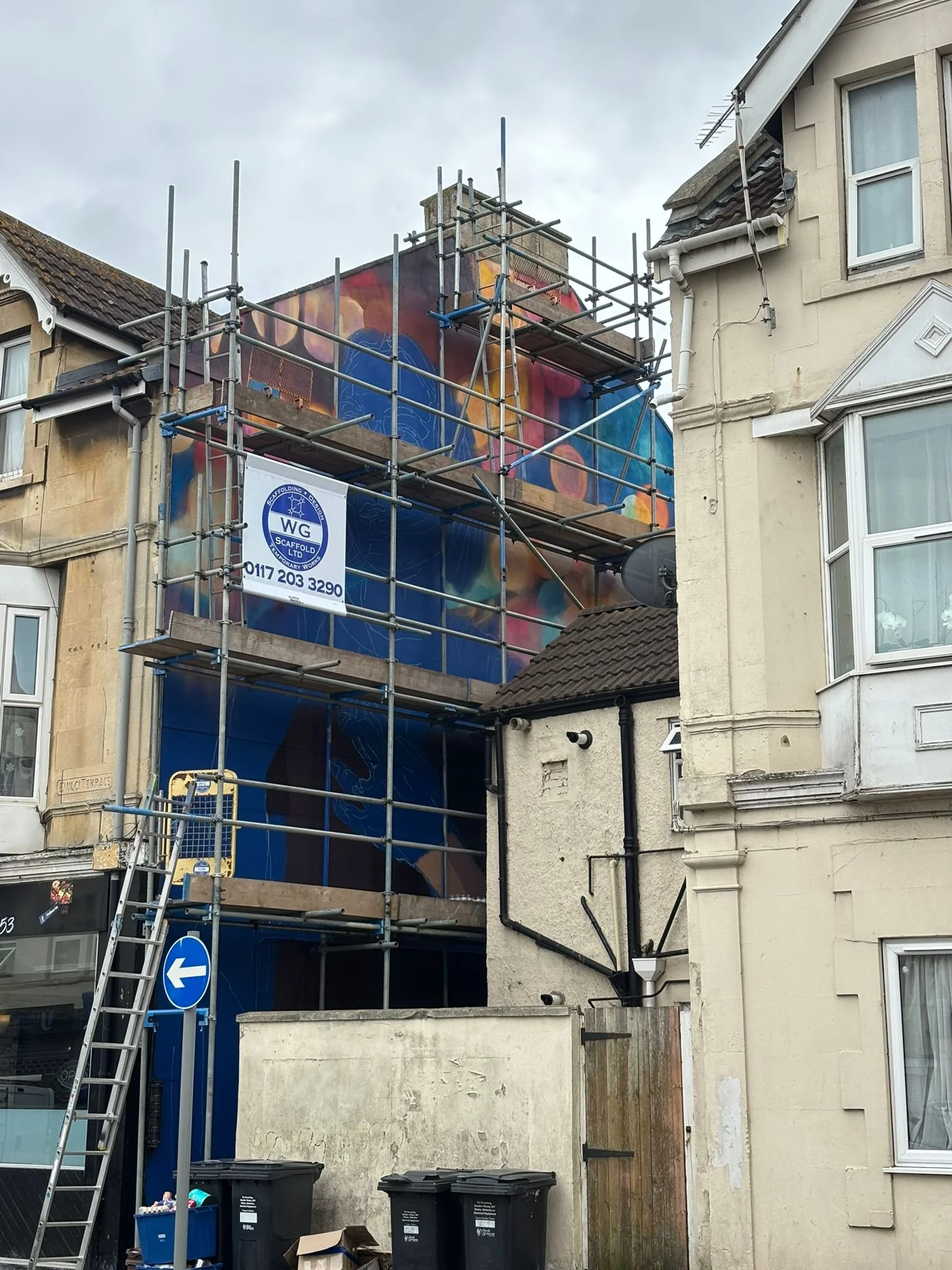
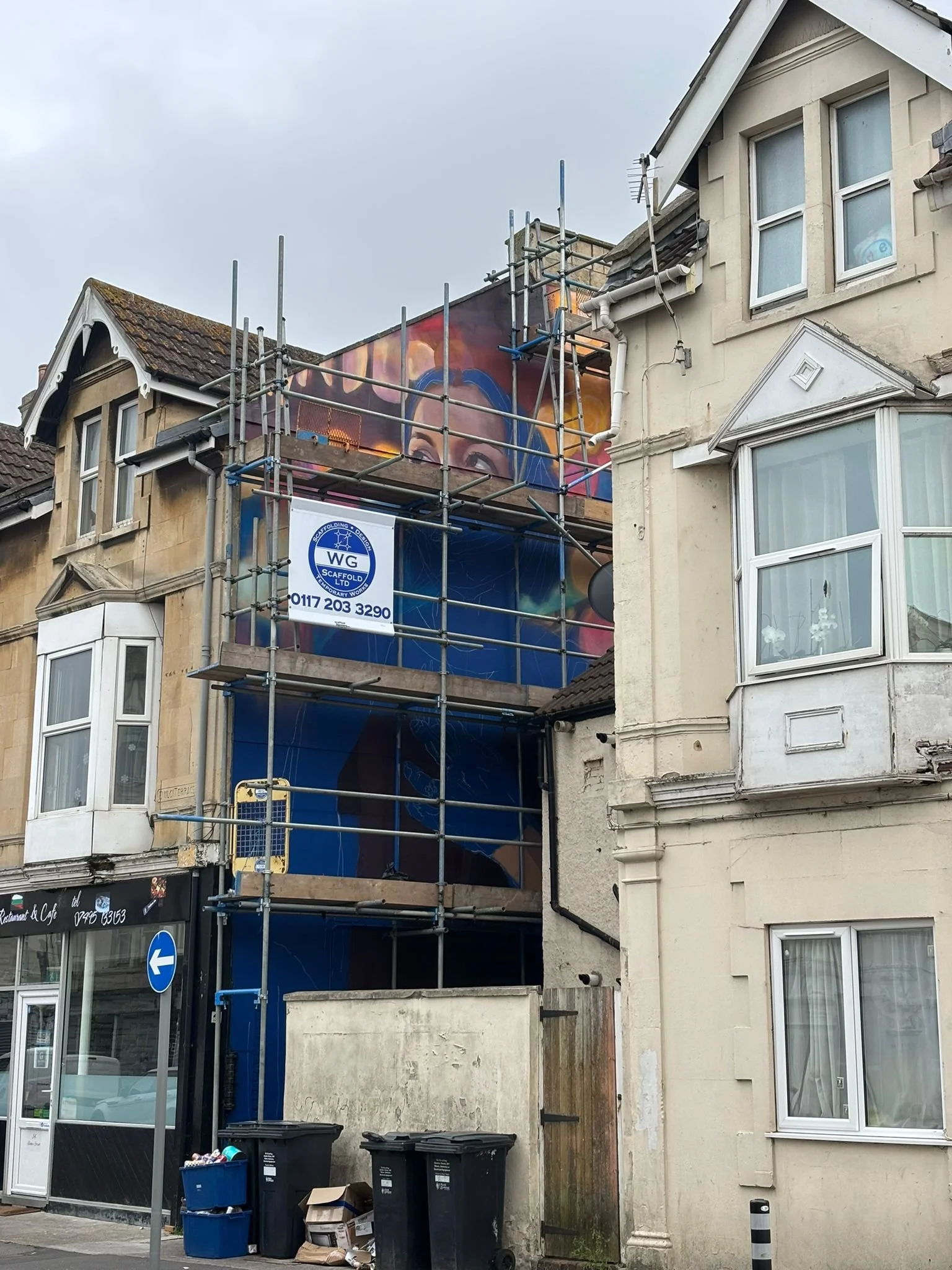
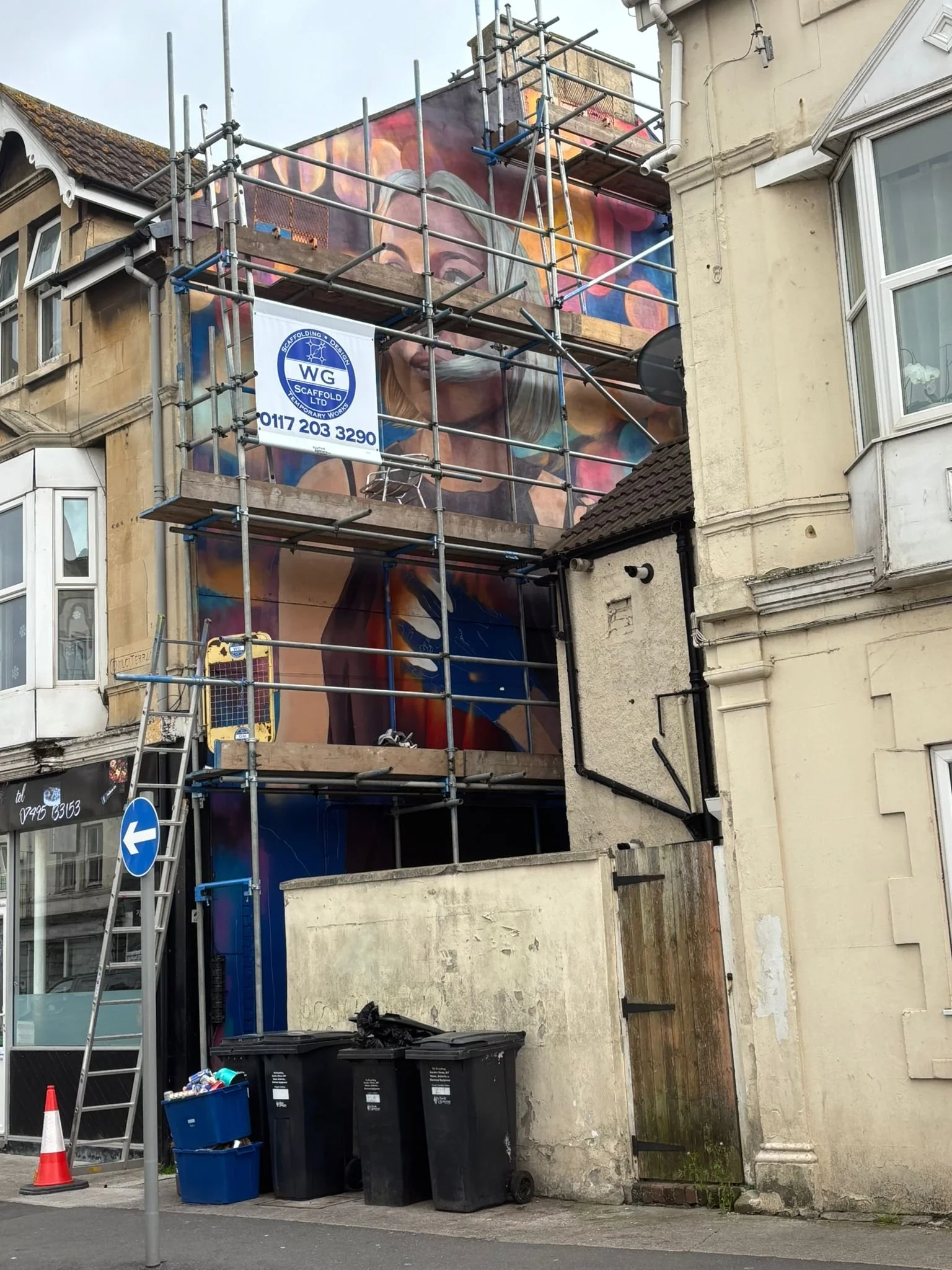
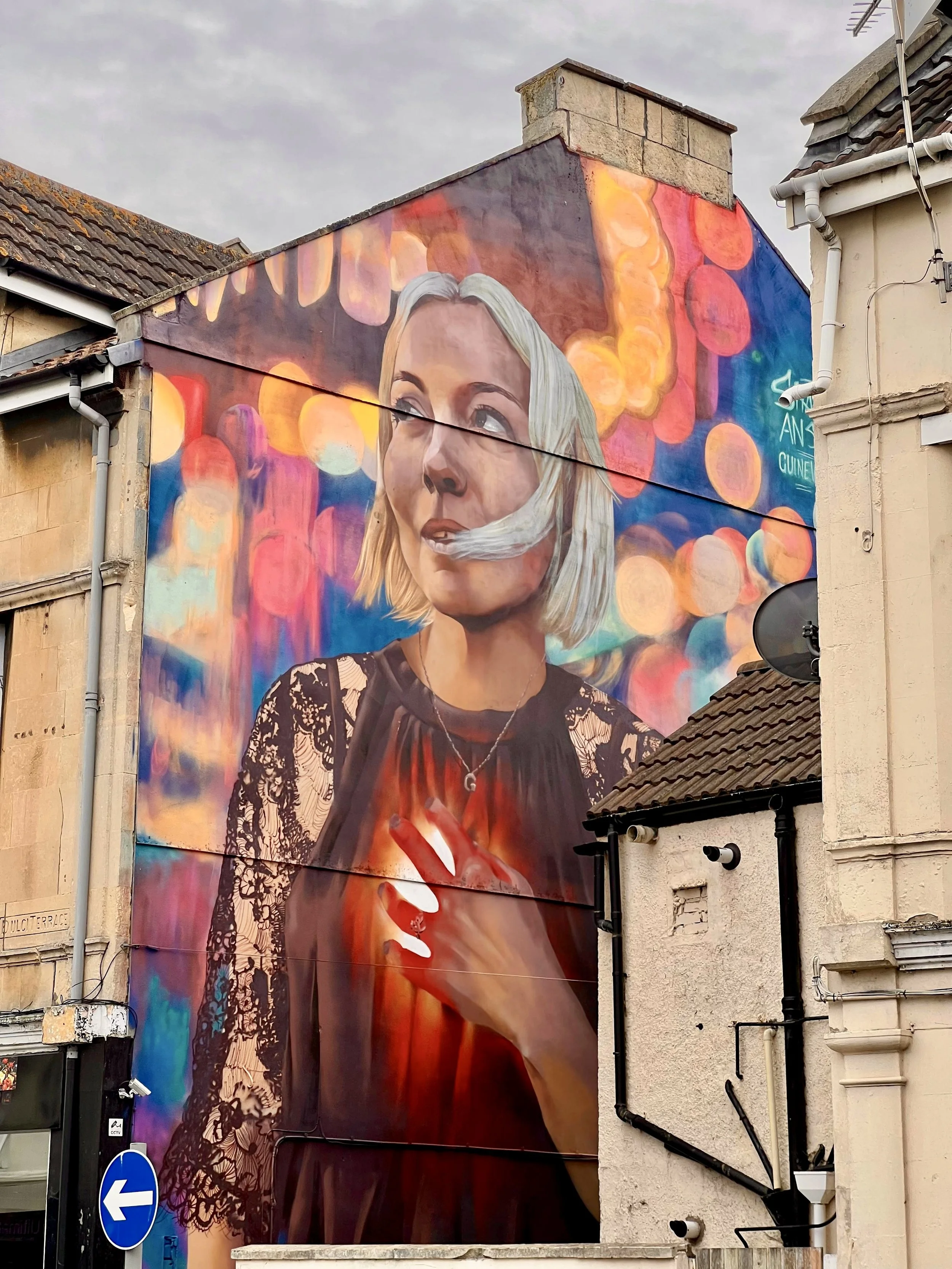
Guinevere developing with scaffolding, and final piece
The Outcome
The mural succeeded in its primary objective: drawing people into Baker Street.
Visitors attending the festival made deliberate trips to the location. This has been sustained since, with street art enthusiasts and mural “hunters”, straying from the usual seaside strip to visit the artwork. Locals who previously had no reason to visit the street began to pass through.
The business that commissioned the mural reported increased footfall long after the festival finished, and nearby cafés also benefited from the increased activity. The street became part of the wider festival map and, for a time, a small destination in its own right.
While community engagement was not the focus of this project, local response was positive, and the mural is now recognised as a marker within Weston’s growing street art landscape.
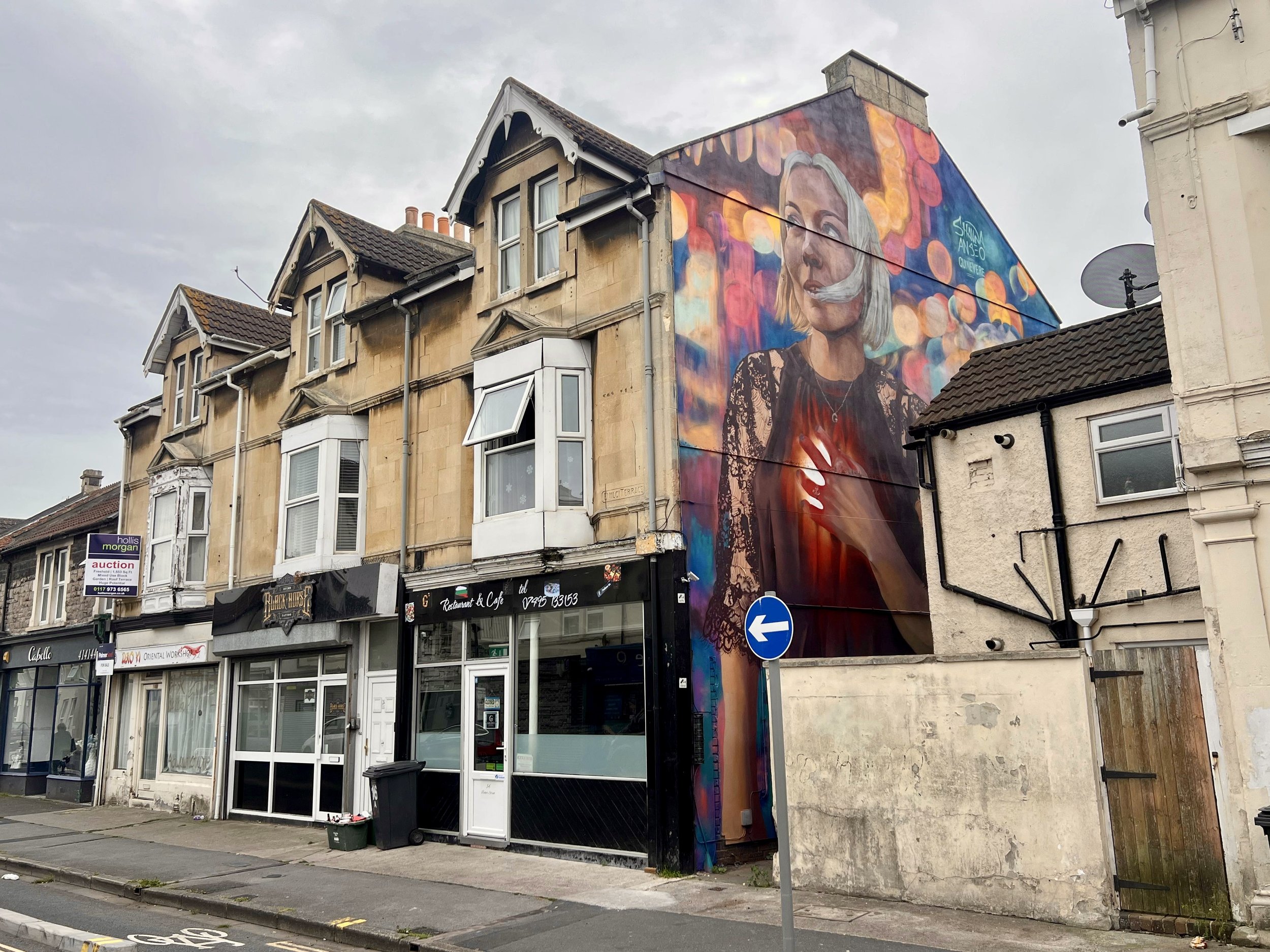
Guinevere in situ on Baker Street, adjacent to a row of shops
Why It Worked
This project worked because the artwork was designed explicitly for function.
Rather than acting as a reflective community symbol, the mural operated as a visual attractor, bold, joyful, and immediately legible. The willingness to adapt colour, composition, and tone to suit the site and the commissioner’s goals ensured the intervention did what it needed to do: bring people to a place they would otherwise ignore.
It demonstrates how public art can be used not only for identity and storytelling, but also as a practical tool for economic and spatial activation.
Interested in a project like this?