
The Weaver
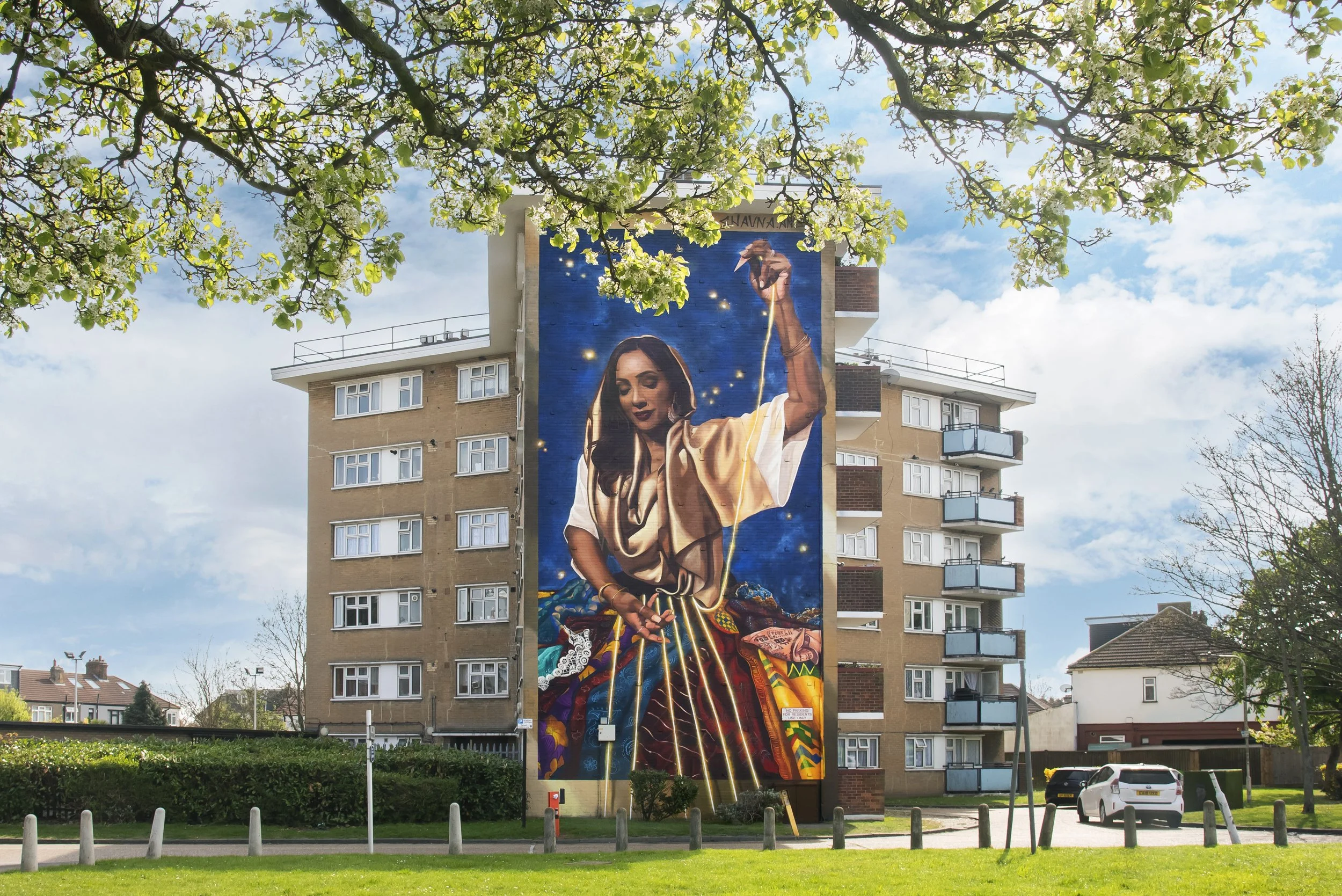
The Weaver, on Ilford Lane in context. Photo © Street Art Atlas
Location: Ilford Lane, Ilford, London
Client: Redbridge Council
Funding: Levelling Up Fund
Site type: Estate entrance / high-street gateway / regeneration
Role: Lead artist
Year: 2025
Outcome: The end of Ilford Lane became a destination, with a landmark mural celebrating South Asian women, cultural diversity and cohesion and repositioning a neglected space as a place of pride, visibility, and belonging.
Key Takeaway:
Deep, site-specific storytelling can build community buy-in and civic pride in complex, diverse neighbourhoods: even under political sensitivity and tight timelines.
The Context
Ilford Lane sits within one of London’s most diverse neighbourhoods. Historically on the outskirts of the city, Ilford became home to successive waves of migration as London expanded, and is now predominantly South Asian, while remaining culturally and religiously diverse.
Despite a dense residential population, parts of Ilford Lane had become overlooked and disconnected. There was limited social cohesion between communities, and many residents felt unseen within civic space.
Redbridge Council secured Levelling Up funding ring-fenced for public art, with the intention of creating a mural trail along Ilford Lane, a sequence of artworks designed to build identity, act as wayfinding markers, and signal long-term investment in the area. The project was later supported by a small-scale street art festival to extend visibility and footfall.
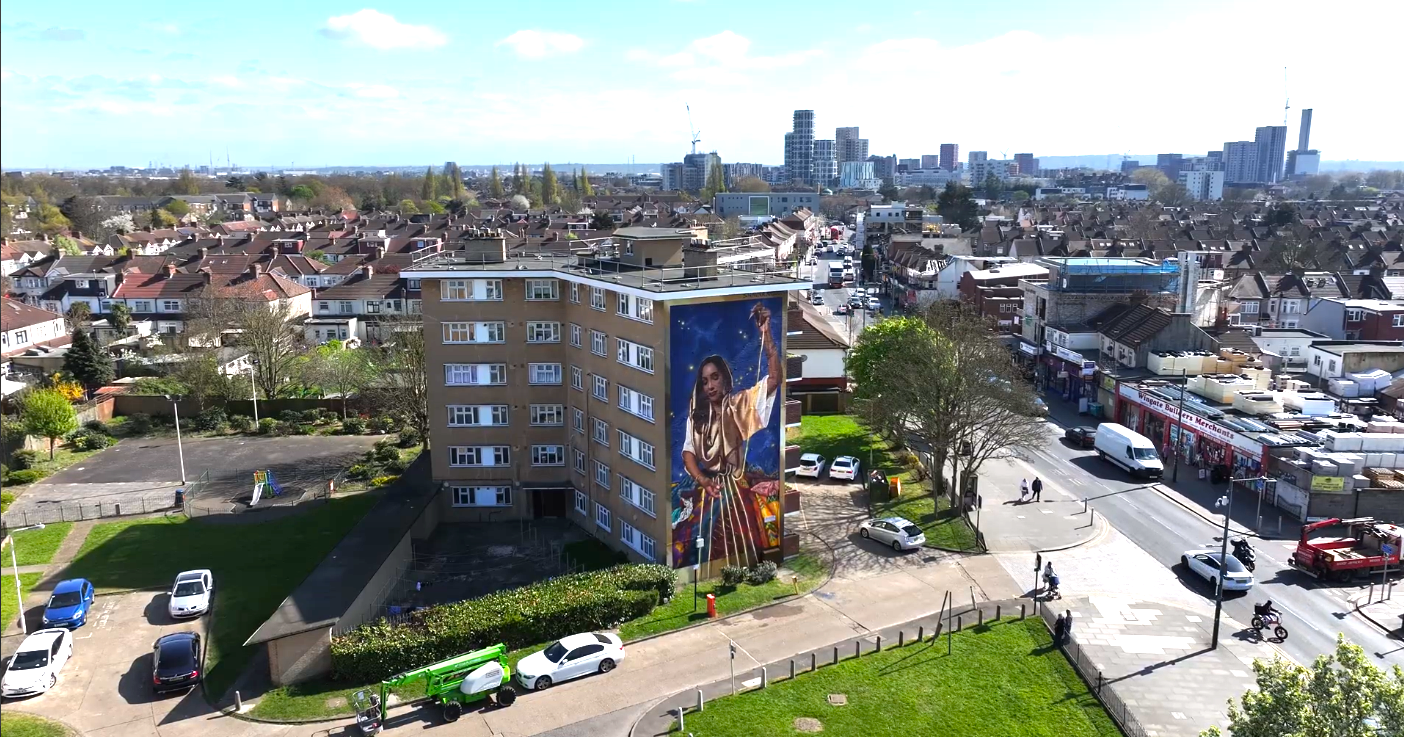
The Weaver, towards Barking. © High Flying Drones
The Challenge
Scale and site:
The mural site was the largest the artist had undertaken to date: a six-storey façade at the entrance to a residential estate and visible from a long distance down Ilford Lane. The scale demanded ambition, while the location required sensitivity to residents’ daily lives and access needs.
Installing and operating a cherry picker while maintaining entry and exit to the estate required careful coordination.
Social and political sensitivity:
The project unfolded against a backdrop of heightened tension, both locally and nationally. Ilford’s communities have differing views about identity, representation, and integration.
There was also anxiety within the council about potential backlash. Late in the process, pressure emerged to dilute the artwork into something more generic, patterns or florals that could avoid controversy but would risk meaninglessness.
Strategic constraints:
The budget was extremely tight. A smaller wall was initially proposed, but the artist recommended committing to the larger façade to ensure the work’s impact justified the public investment.
Timelines were compressed: funding had to be spent by the end of the financial year (April 2025), with commissioning beginning in December 2024. Governance was complex, with multiple stakeholders and no single, clear decision-making chain, increasing the risk of last-minute changes.
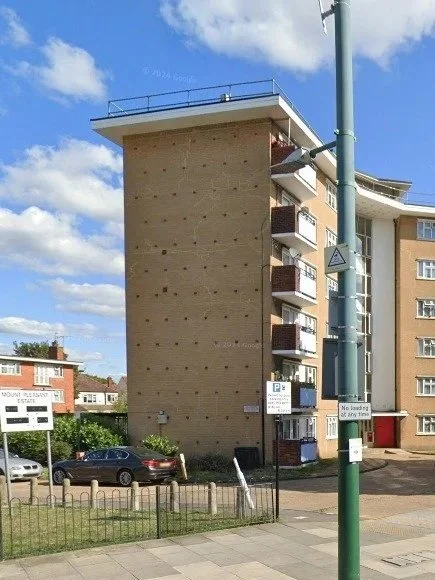
The wall prior to painting
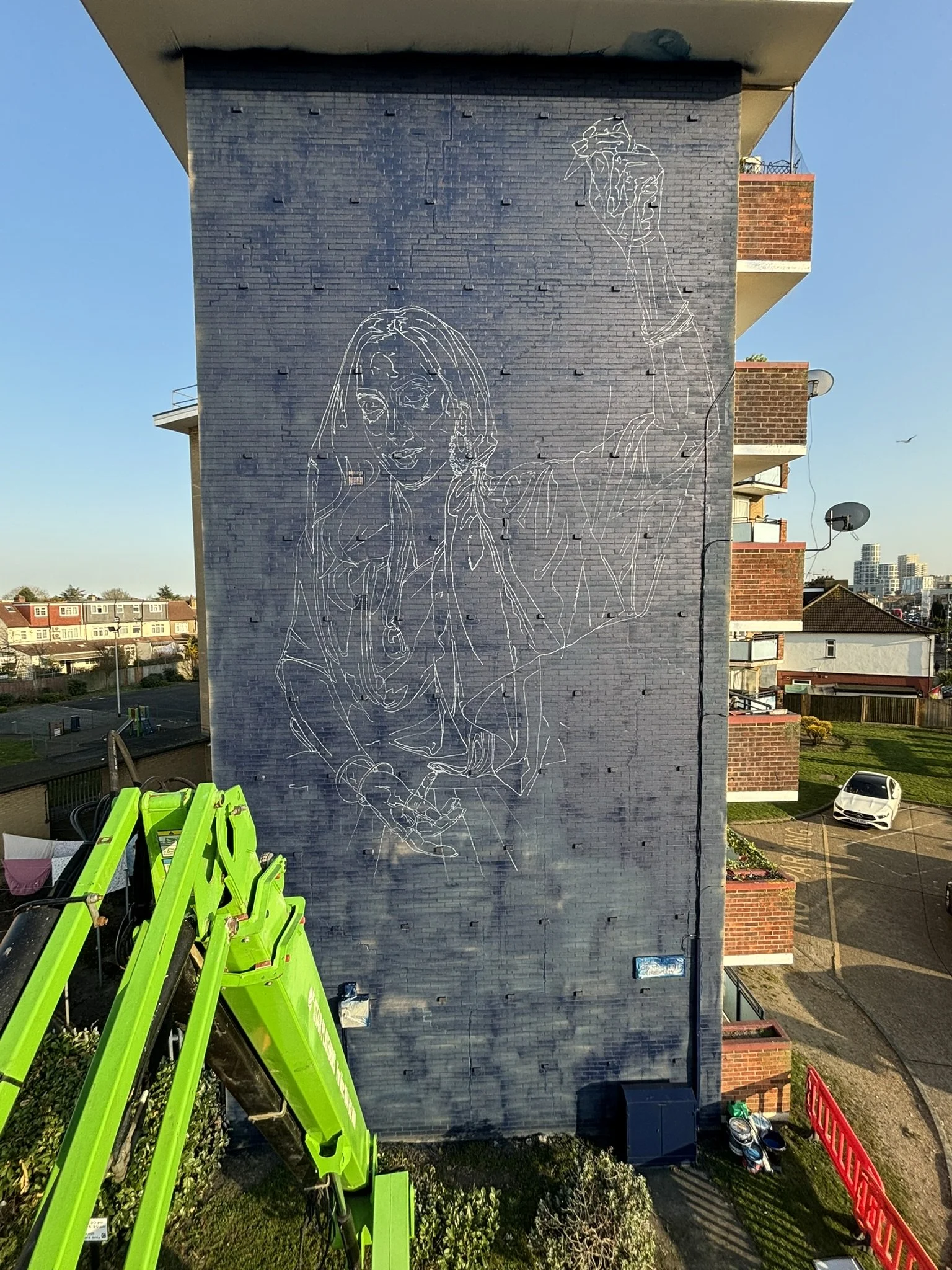
First outlines on The Weaver
The Approach
The artwork was rooted in the textile history of Ilford Lane.
For many South Asian women in the area, the arrival of the rag trade, home-based garment work, represented their first access to economic independence. Ilford Lane later became known as a destination for fabric shopping and wedding dressmaking, embedding textiles deeply into the area’s cultural and social fabric.
Textiles offered both a literal and metaphorical starting point: fabric as labour, heritage, celebration, and a way to hold multiple identities together without erasing difference.
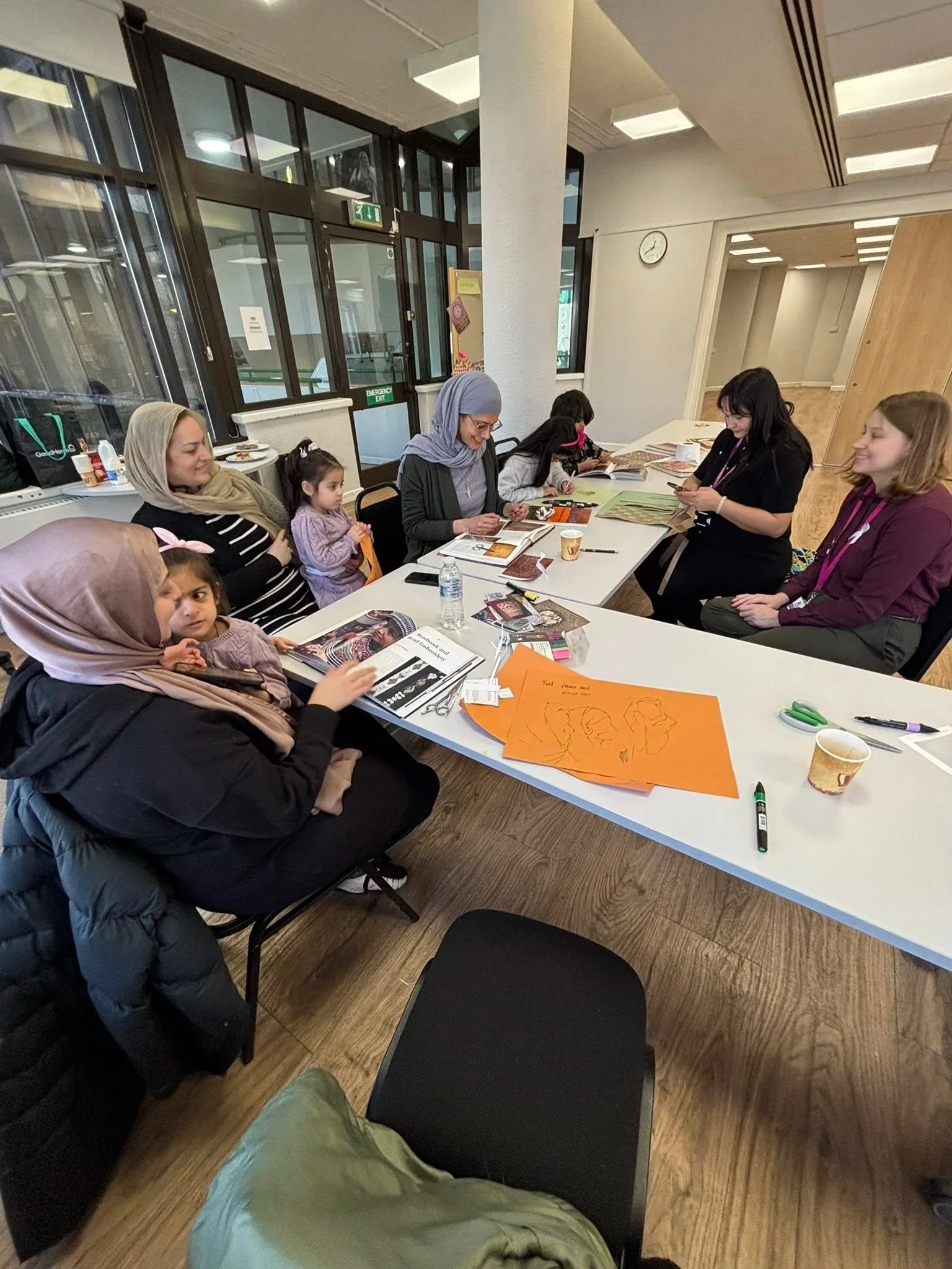
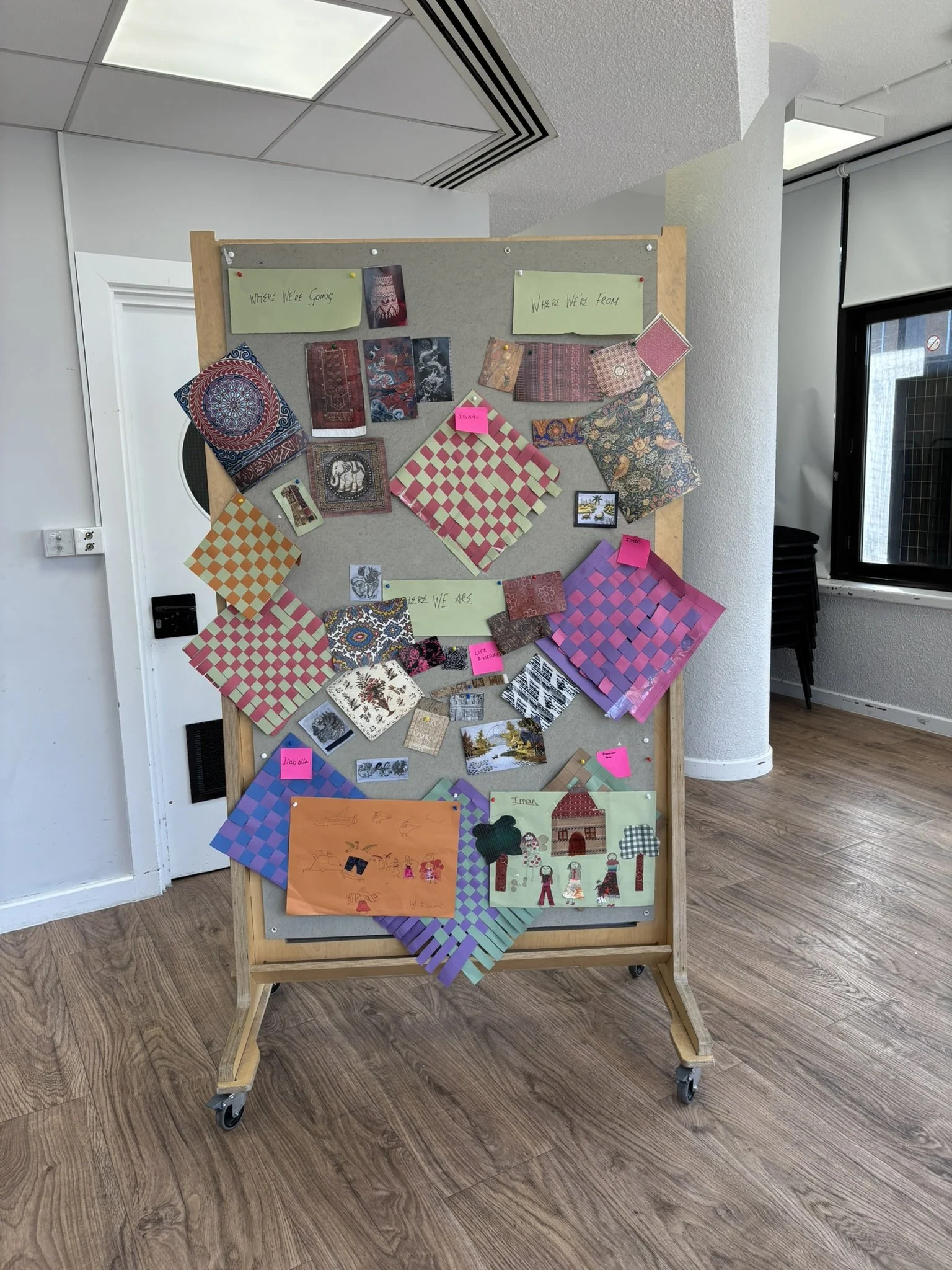
Community workshops were held in the local library, where residents were invited to bring fabrics that held personal meaning and to collage images using fabrics from swatch-books provided by the artist. These sessions used simple weaving techniques as a framework for storytelling, sharing memories of the past, experiences of the present, and hopes for the future.
Through these conversations, a shared narrative emerged: the figure of the weaver as a cross-cultural archetype. Myths of weaving appear across Asian, Middle Eastern, American, African and European traditions, a symbol of active creation, interconnection, and the shaping of destiny.
The Artwork
The final mural is a six-storey figurative work positioned as a gateway marker at the end of Ilford Lane.
At its centre is a South Asian woman, depicted in action, weaving at a golden loom. She is framed in gold, seated among layers of fabric representing the diverse textile traditions present in the area. The background represents a cosmic night sky, referencing weaving metaphors found in Sufi poetry and Hindu mythology, the weaving of time, fate, and future.
The figure was developed through staged photography with a local woman, using fabrics sourced directly from Ilford Lane. Multiple iterations were tested in response to stakeholder and community feedback.
Scale: Six storeys (approx. 18 metres high)
Medium: Spray paint over emulsion base
Finish: Polyvine Dead Flat + Polyvine Satin (sponsored by the manufacturer)
Visibility: Long-range visibility down Ilford Lane
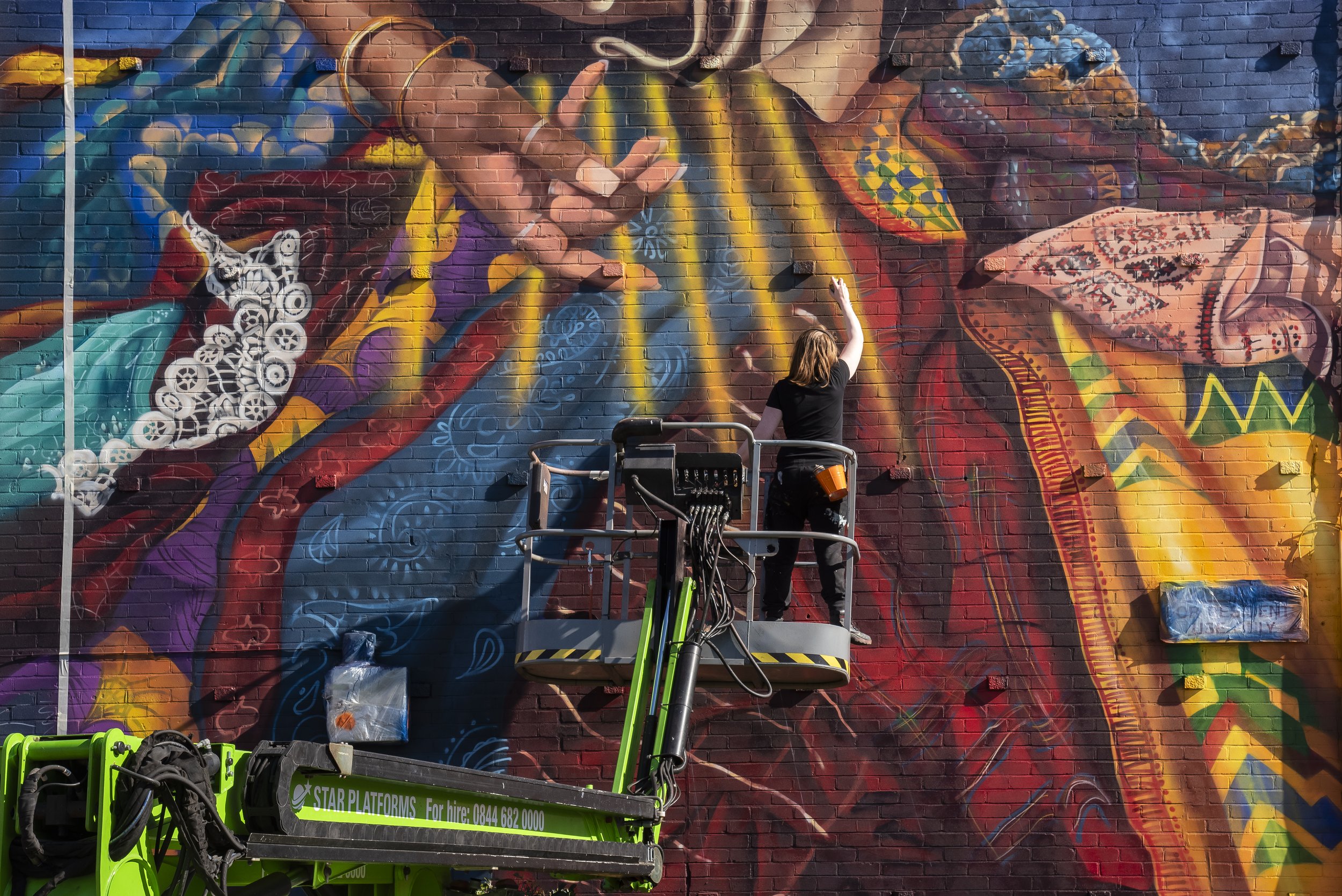
Painting the Golden Loom, The Weaver © Street Art Atlas
Community Engagement & Decision-Making
This project required sustained dialogue.
Initial image testing prompted mixed reactions. Rather than pushing forward defensively, the artist and council worked together to understand the feedback beneath the surface. What emerged was not rejection of representation, but debate about how power and womanhood should be expressed.
Through further photographic testing and a door-to-door consultation with residents of the estate, the final image was selected by community vote. The chosen depiction balanced activity and strength with composure, powerful without being confrontational.
This process reinforced a key principle of public art: the work must belong to the people who live with it, not just those who commission it.
The Outcome
The Weaver has become a landmark destination at the end of Ilford Lane.
Residents gather beneath it. Families picnic in the green space in front of the wall. People stop to photograph it, to talk about it, and to point it out to visitors. Some travel to Ilford specially to visit it.
For many, the mural represents the first time they have seen someone who looks like them, particularly a South Asian woman, represented with scale, dignity, and mythic presence in civic space. The work reframes the everyday into the extraordinary, allowing lived experience to be seen as foundational rather than marginal.
Feedback to both artist and council has repeatedly returned to a single theme: feeling seen.
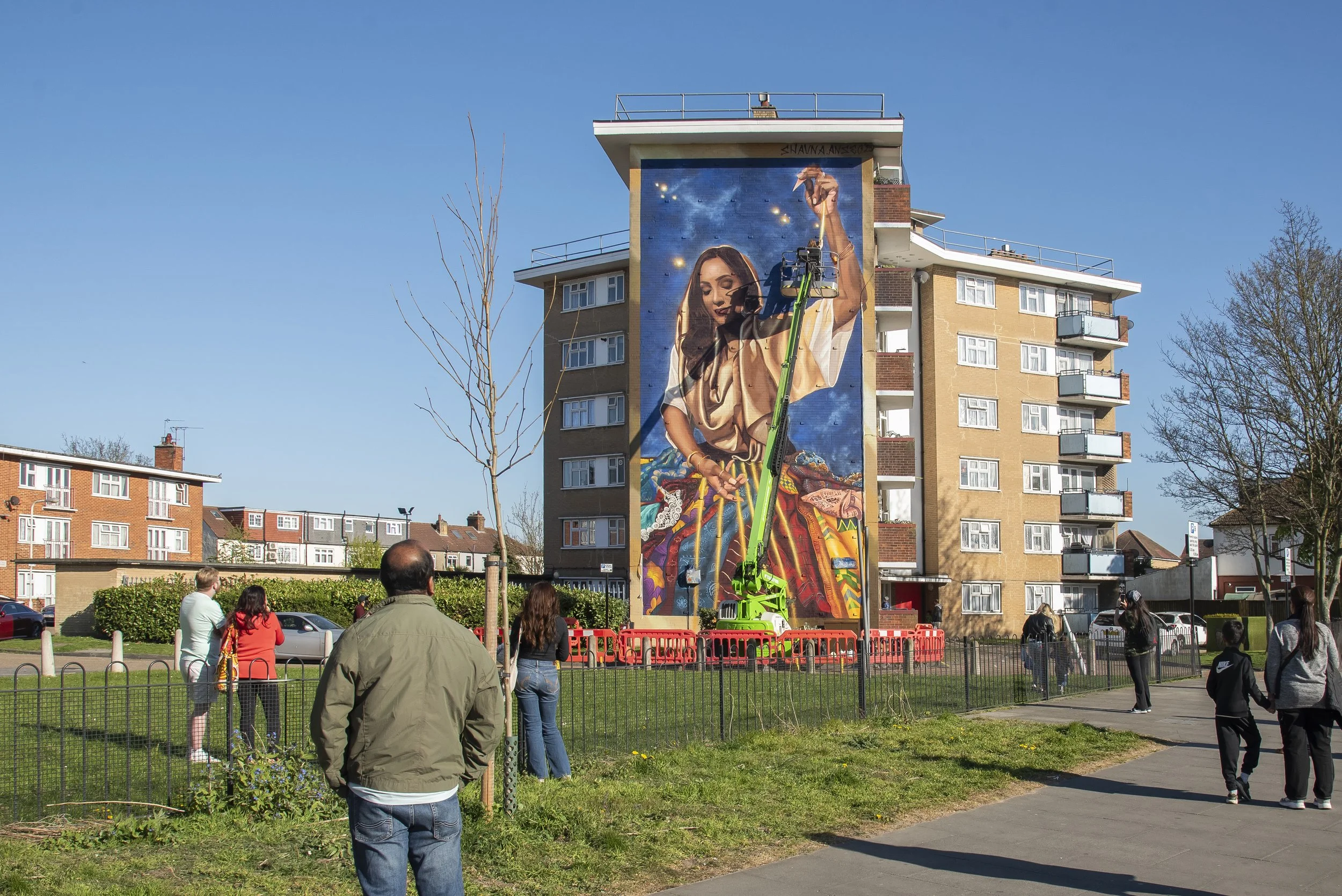
The community gather to watch the painting of The Weaver © Street Art Atlas
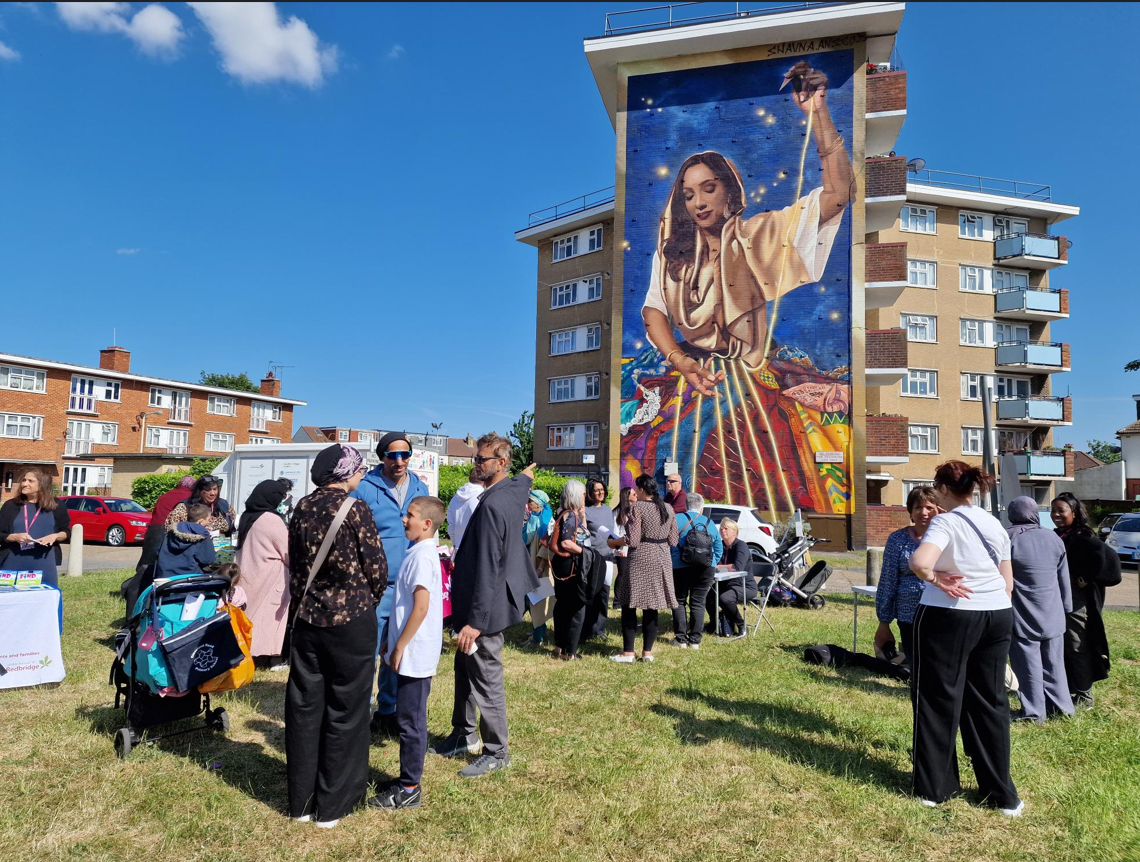
The Weaver community launch day
Why It Worked
This project worked because it resisted generic safety in favour of specific, grounded bravery.
The mural could not have existed anywhere else. Its imagery, materials, and meaning are inseparable from Ilford Lane and the people who shaped it. Diluting that specificity would have undermined the very purpose of the intervention.
The strength of the outcome came from:
deep research and listening
sustained community engagement
clear artistic conviction
and a willingness, from both artist and council, to stand behind a meaningful decision
In contested spaces, placemaking requires courage. The Weaver demonstrates how story-led public art can hold complexity without flattening difference, and how visibility itself can be an act of care.
Interested in a project like this?